
Ever see a street sign and wonder how much, or how little thought went in to coming up with it?
These days, many subdivisions have themed names- The Village By The Arboretum for example, rolls through a series of tree-centric names from front to back. But then there’s the odd street like Hands Drive that makes you wonder what the story behind the name is. Surely there’s a story. I mean, there’s no way -short of tossing random nouns in a hat- that someone could just come up with that.
So, is that a consideration for you? Could you live on a street with a name that annoyed you?
Turns out that not only do the names of streets matter to people, but the street suffix has a marked impact on the sale price of homes too.
Trulia.com, an American real estate site took a look at over 2.5 million listings in their database and took the median PPSF (Price Per Square Foot) among prominent street suffixes. Here’s what they found (The percentages are each suffix’s share of the total number of properties analyzed):
- Boulevard, 2%, $117.
- Place, 2%, $110.
- Road, 16%, $109.
- Way, 3%, $107.
- Terrace, 1%, $102.
- Court, 6%, $101.
- Lane, 8%, $101.
- Circle, 3%, $100.
- Trail, 1%, $97.
- Avenue, 15%, $96.
- Drive, 22%, $96.
- Street, 19%, $86.
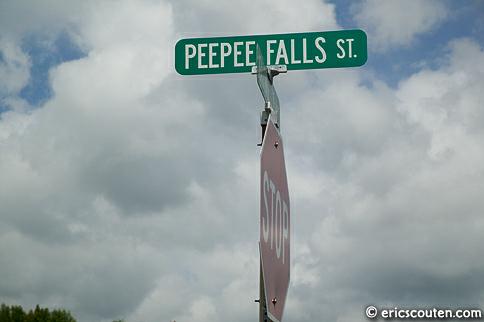
Streets like this contribute to the disparity.
The biggest shocker here is undoubtedly the cost to live on the relatively generic “roads”. I don’t tend to equate “roads” with premium residential housing. To me, “terraces” and “courts” tend to suggest more luxurious accommodations, but what do I know?
Trulia was nice enough to offer some explanation for the pricing of homes on boulevards:
“Why is ‘boulevard’ the most expensive address suffix? Well, while the word does have a sophisticated French origin, it actually might have more to do with the mix of the homes located there. Approximately, 37% of homes on ‘boulevards’ are in multi-unit buildings, such as apartments and condos. In contrast, these types of homes make up no more than 16% of homes on every other address suffix. A greater concentration of multi-unit buildings could drive up costs as they are often located in denser, urban areas where space is at a premium.”
That city centre justification holds water for me. The smaller a home’s footprint, the greater PPSF you’ll end up paying, regardless of where it’s located. But especially when they’re located in urban centres, property in general will outpace that of the suburbs.
I’ve lived on a “drive”, a “street”, a “crescent” (which apparently isn’t as popular in the States as it is here), an “avenue” and a “road”. And while the “avenue” was the nicest by far, I can understand why the “street” is worth significantly less than all the others.
It was a far busier street than any of the others, and the house was dated. How dated you ask? We had a milk box. Exactly. A mail box but for milk, so when Ol’ Johnny came whistling along in his half-sized Purolator truck, he could set you up with a fresh supply of 2%.
The perception of street suffixes is a worthwhile consideration when buying a home, but ultimately, this study is better taken at face value. Nobody is going around writing off homes on XYZ Street based on a suffix. Either a house is on a busy street, in an urban core, with mature trees, or it isn’t. Still, this study reveals some pretty neat data on what street names tend to suggest.
 Real Estate Play-By-Play