Fall: PSLs & Busy Realtors

Gross. A fall blog post. And though I refuse to accept that summer’s over, it’s my job to look ahead to the inevitable. Sorry.

Fall: PSLs & busy Realtors.

What’s 400 calories when you’re working this hard? Honestly.

The Labour Day long weekend traditionally marks the end of summer, but as the saying goes: every ending is a new beginning. And so, without delay, on comes the fall real estate market. Tuesday marks the unofficial launch of what I like to consider the spring market’s little brother.

Over the course of the year, real estate activity has two peaks; once in the spring (often May) and again in the latter months (Sept./Oct.). This means that the number of listings should be picking up as early as next week, although so too does the number of buyers on the lookout. Now, both the number of buyers and sellers is relatively fewer compared to the spring, but will typically grow in both regards from the number of whom were active in the summer months.

I wouldn’t be surprised if this fall remains quieter than usual; given the strength, & especially the duration, of the spring market this year. With activity having remained strong through early August, it wouldn’t be unreasonable to think that the number of people who’ve intended to move in 2015 have mostly done so already. These first couple weeks of September should serve as a good indicator of what to expect over the balance of the fall. If the number of new listings is on the small side, then it would be reasonable to expect overall sales volume to come in low relative to typical fall market expectations.

It’s important to consider when reading, or listening to the media discuss what’s about to transpire, exactly what percentage increases or decreases are relative to. Context here is always very important.

If they say home sales are up 2% in September, it could mean a number of things. For example, if sales in September are up 2% from August, that’s really not much of an increase at all given the typical cycle of real estate sales over the course of the year. You expect a growth in volume in the fall. However, if they’re saying prices are up 2% from August, then that is a very big deal, and as a seller, you could stand to benefit greatly from a piping hot market. The best measure for real estate activity is year-over-year sales, meaning – September 2015 sales compared to September 2014 sales – as that accounts for seasonal variations in activity. The best measure for price growth is month-to-month change, or even better, a rolling average of price changes over the course of a few months.

In summary, get ready for lots of junk mail, sponsored Facebook posts & lawn signs in your neighborhood. But enjoy them, because when they’re gone, so too will be the warm colours, decent weather and Instagram pics of Pumpkin Spice Lattes. And we don’t want that now, do we?

Want to Sell High? Get Inside Buyers’ Heads.

It’s no secret in real estate that, ultimately, price trumps all else. Every home will sell in a certain amount of time, at any given list price. Want to sell that mansion in Puslinch in twenty minutes? List it for $50,000. Don’t know why your 900 sq. ft. bungalow on Speedvale hasn’t sold in 9 years? It might be because you’re asking $750,000.

Extreme examples, sure. But it illustrates the point that the asking price, relative to the buyers’ perceived value of the house can have a profound impact on the time it takes to sell. When the list price exceeds perceived value, the house will sit on the market longer. If buyers see more value than the numerical value a seller puts on it, well then that’s where we see property move quickly.

The goal then, from a Realtor’s point of view is to strike the perfect harmony between a buyer’s willingness to pay and the sellers’ expectations and needs in terms of sale proceeds. Only in the rarest of circumstances, especially today, can a listing agent dupe buyers into paying more for a house than it’s worth. And sellers can be nieve in thinking otherwise. Just because, as a seller, you “need” a certain number for the house doesn’t mean there’s a single human on the planet who will give you that figure. Not to mention that today’s buyers are savvier than ever and shop loaded with information including: sale prices, days on market statistics, fact sheets on comparable properties and all sorts of other goodies readily accessible through a Realtor. The market, as a whole, doesn’t make mistakes.

Now that’s not to say that some sucker won’t. I’ve seen it before and I’ll see it a million more times where someone bought a house privately (*slams head into desk*), or on bad advice, and wound up paying way too much. But Buyer Representation Agreements, BRA’s for short, create a responsibility for agents to protect their buyer clients’ interests, and that includes not allowing them to overpay substantially without interjection & consultation. This means that as soon as a buyer locks in with their agent, your chance of taking them to the cleaners as a seller is virtually nil.

So, then, how do we manage to differenitate good agents from bad ones & smart sellers from suckers? A lot of it can boil down to the psychology behind a list price. The difference between a good deal & a bad deal is growing ever slimmer and outliers becoming more and more rare; but research has gone into strategizing a list price, and here’s what it says: The “just below” pricing model you see on listings every day generates greater sale prices than other pricing strategies.

For the same reason McDonald’s charges $4.99 for a Big Mac, and everything at Wal-Mart costs $X.96; selling your home for just less than a given number can make all the difference.

In fact, evidence from a December Washington Post article suggests that this charm pricing strategy -to make the house look more affordable- can actually result in a seller receiving 2% more on average than homes using a different strategy. And while 2% might not sound like much, consider that most buyer or “co-operating” agents earn a 2-2.5% commission for representing the buyer. In essence, with this strategy, you can have a buyer brought to your door for free.

There were more than a few highlights to the story, which I’d highly recommend reading in full at the source. That said, in an effort to summarize both the article & my thoughts:

1. Ignore the urge to meet search criteria. In a very aware move, the researchers asked buyers for their take on homes priced at a dead-even number such as $300,000. In theory, with so many buyers using auto-search criteria & Realtor.ca price ranges, evenly priced houses might show up in a few more searches than their unevenly priced counterparts. At $300k for example, you might show up in searches from $250k-$300k & $300k-$325k; a perceived benefit. In reality, feedback from buyers suggested that they felt sellers were just ballparking their asking prices and weren’t sure what it was really worth. On the other hand, a $299,900 list price looked like a bargain.

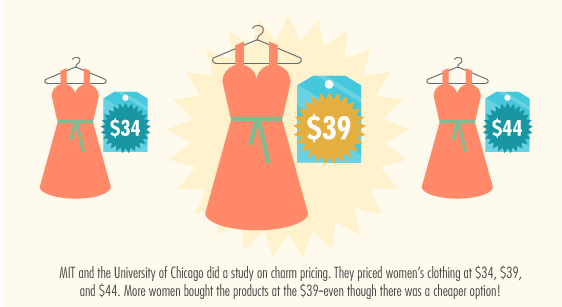
Charm Pricing

Source: Econsultancy/Arie Shpanya, 2014

2. Charm pricing promotes over-pricing. Just like in “The Goods” starring Jeremy Piven (an unjustly underrated movie, FWIW), the product doesn’t need to be a good deal- it just needs to look like it is. List prices designed to feel like a bargain didn’t end up being one for buyers. In fact, they were more overpriced than employers of any other pricing strategy… to the tune of about 5% each time. In the movie, Piven’s character, Don Ready, employs the classic “put a higher price sticker on the windshield, just to tear it off and close the guy with a bargain” move that car salesmen are known for. Home sellers do it too, whether they know they are or not.

3. There’s a method to the madness. Only 45% of listings took the charm pricing approach; with others deviating to the round-number pricing to fit search criteria, or an exact price (ie. $239,588, as if to suggest they just added up a bunch of receipts and this is their number). I can appreciate the merits of the round number pricing as more buyers turn to rigid search criteria online, however, only houses worth near to a major round number would even qualify for this strategy. Charm pricing appears in nearly every segment of our lives as buyers, from groceries to cars to shoes (as if to suggest women look at the prices of shoes), and there’s a reason for it. It works. It generates sales, while blissfully pulling the wool over buyers’ eyes. And as sellers, there’s nothing more you could ask for.


Live-work buildings have a place in Guelph, but not at 15 Mont St.

Below is my contribution to the Guelph Citizen, published December 10th, 2014. The original article is here; and a counter-argument from the building’s architect can be read here.

Let me preface this argument by clarifying that it’s my firm belief that live-work apartments are an integral part of creating walkable cities, and intensifying city cores, as is Guelph’s directive. They have a positive impact towards reducing a city’s carbon footprint and improve density targets by better utilizing space in areas that are particularly starved by it.

Unfortunately, the developer planning to undertake 15 Mont St. has simply chosen the wrong battle. In reviewing the City’s zoning by-law and maps, it’s apparent that the corner of Mont and Woolwich is like many others in the downtown periphery. Many are zoned for office purposes along Woolwich, an arterial corridor, with low-density residential zoning along the side streets behind.

A 3-storey building currently occupies the corner of Mont and Woolwich, and is situated as far towards the eastern side of the property (towards Woolwich) as possible. 15 Mont St., the house whose existence hangs in the balance is placed on the westernmost side of its abutting property, creating the largest possible separation between the 2 buildings. This is often done to diminish shadow impact, noise pollution, etc., and is a fairly common design technique. It’s the same principles that are applied when deciding which types of development abut others; why factories don’t neighbour schools, for example.

The current three storey building at the corner of Woolwich and Mont


While still a relatively minor example of the instance above, an extension of the building at 360 Woolwich would envelop the majority of the lateral footprint of 15 Mont and have a detrimental impact on sightlines, noise and overall aesthetics, particularly affecting residents on the west end of Mont St. It’s important to additionally consider the style of the current office building and the virtual impossibility of incorporating the apartment addition in a way that blends at all naturally.

Furthermore, the property is located in an older, established area of the city. Live-work accommodations are more successful in the heart of the city, where amenities and employers are plentiful and directly accessible. The scale of the abutting office building is not to a level that would sustain the residential aspect of the development and tenants/owners would be no better served than a regular apartment building, for which the property is appropriately not zoned for.

mont2

The proposed development just in from the corner of Woolwich and Mont.


In summary, live-work buildings, when that’s what they are, are a major component of successful future growth in the City of Guelph. They do have a place though, and I don’t believe that place is 15 Mont St. Having said that, should this building go-ahead, I think it sets a whale of a precedent to accelerate future developments along the Gordon-Norfolk-Woolwich corridor, which in spots is an absolutely great thing for the city’s density targets and overall sustainability.

Tyson Hinschberger is a Realtor for Planet Realty Inc., Brokerage in the city of Guelph, Ontario. You can follow him on Twitter, @hinschcity. 

How Young Homebuyers Are Bucking the “Too Expensive” Narrative

“Home ownership is too costly.”

“We don’t make enough money.”

“Banks are biased against us.”

Regardless of validity, the reasons against ownership for young people are numerous. Despite them however, more and more are defying the excuses and converting their hard-earned paycheques into a piece of property to call their own.

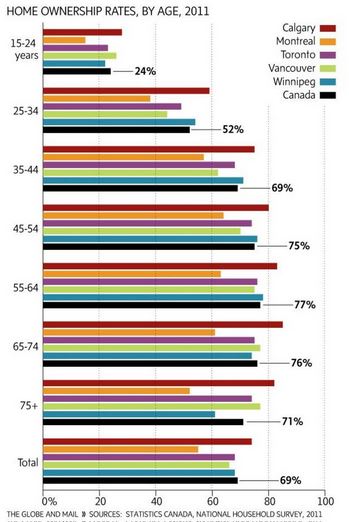
More and more young people are buying houses & condos, despite narratives to the contrary. From: The Globe & Mail

More and more young people are buying houses & condos, despite narratives to the contrary. From: The Globe & Mail

It’s a good thing they are too, as rates of home ownership tend to decline after age 65. While our demographics shift toward an older population, young buyers will be expected to fill that void. An inability to do so long-term could create a vast housing surplus, and drop property values across the board. So far though, it seems that the under-25 crowd are keeping things heading in the right direction.

Over the past decade and beyond, home values in some of the major urban cores have skyrocketed as land scarcity and foreign investment have pushed housing demand ever higher. It pits buyers of all kinds, especially young buyers with less accrued equity, in a tight spot. They’re being forced to compete with foreign, cash buyers using the Canadian real estate market as their own personal piggy bank, outside the grasp of their communist governments. Naturally, t’s a one-sided fight.

That said, in smaller markets, housing remains substantially more affordable; and the goal of home ownership much more attainable than the general overlying narrative. Furthermore, if buyers in Vancouver, Toronto and Montreal can buck the trend, then the same should be true across the board.

I hear people my age talk a lot about how expensive housing is, and what they don’t often consider is that there are landlords out there making positive cash flows off of them. In select instances, a landlord can lump mortgage costs, insurance and taxes together and still take his family out for a steak dinner on a tenant’s rent. So why then, aren’t young people more proactive about it?

Overall, we are finally catching on. In fact, home ownership among the youngest share of the population (Under 25’s) rose by 4% from 2006 to 2011 and now remains around 25% from the graphic above. To buyers’ benefits, price growth was minimally stunted by the US recession, aiding in affordability. However these gains come despite consistent upward price movement from the big 3 Canadian cities, and in ignorance of decreased affordability in those markets.

How is this possible?

Having established that, counter-intuitively, this generation’s ownership share’s been growing; it’s key to take a look at how. The biggest contributors are buyers’ parents, who are pitching in with down-payments more than ever before. From 2010-2014, first-time homebuyers received about 11% of down payments as gifts from family members, with another 6% coming from personal loans from family members. Though the loan share was unchanged from 2000-2004, the gifted portion is about 5% higher than 10 years ago. With average down payments equaling about 21% on first-time purchases, that 17% figure amounts to $10,080 on your average $300,000 home. For perspective, the house my grandparents bought in 1970 set them back a measly $10k to own it outright, so I guess $10,000 gifts are peanuts. It is understandable though that with the rise in values we’ve, the help from the folks is almost necessary to sustain the goals of today’s young shopper, and given that it’s been the parent’s houses who’ve seen the growth, we know the equity is there to be able to make these gifts, generally speaking.

As parents' aid pushes demand from D1 to D2, both the quantity demanded and the market price rise, furthering the handicap for those without family funding.

As parents’ aid pushes demand from D1 to D2, both the quantity demanded and the market price rise, furthering the handicap for those without family funding.

At the same time, parents are artificially fueling the fire. By adding $10,000 to the budgets of a growing market share, parents are effectively promoting the ballooning of home prices. As illustrated here, these gifts that young buyers are stumbling into is resulting in more buyers entering the market, and buyers’ budgets being greater than they might otherwise be. This in itself creates a bit of a dangerous predicament, since some buyers are being aided by their parents while others are not, and this price shift pushes the latter further from their ownership goals. The Canadian Association of Accredited Mortgage Professionals disputes the impact that parents are having on prices, but consider this: With 1/3 of 18- to 35-year olds who haven’t bought a home attributing the decision to waiting for prices to drop; how will they ever drop if parents keep pumping in money? Answer: They won’t. Even if you don’t have the help, use parents supporting the market as a way to make your house purchase work for you.

Housing is like any investment. You have to pay to play, and you’re not going to make a cent off of it unless you buy something. The people that complain certain stocks are too expensive are the ones who sat on the sideline didn’t buy in when they were affordable. There are elements of risk involved, but you can continue to pay rent to a landlord or you can cut out other expenses to make home ownership a reality. It’s a decision that more and more young people are making sacrifices to pursue. And I can’t blame them for a second.


With statistics from (Links in post):

“How young Vancouver buyers are crashing the real estate party”, Frances Bula, Globe and Mail, October 17, 2014.

“1st time home buyers get more family help for down payment”, CBC News, November 18, 2014.

Upsize or upgrade? More Canadians choosing the latter.

Are you up for the challenge? Have you done your own home renos before?

Are you up for the challenge? Have you done your own home renos before?

Over the past year, Canadians (especially in major urban centres) have been driving the renovation industry past the new construction industry, as housing affordability dives ever-lower. The trend, seemingly brought on by faster price growth in larger homes, is a further sign of income inequality. The wealthy making more and the poor earning less. People unable to afford the space they desire in larger homes, are finding themselves forced to manufacture space- via remodeling, finishing a basement, or creating an addition.

Spending on renovations outpaces new home construction

By Tara Perkins, Globe & Mail

A rising proportion of homeowners find it impossible to trade up to higher-priced residences

More money was spent renovating homes in Canada than building new ones during the 12 months to the end of June, according to data compiled by the Bank of Montreal.

“In the four quarters through [the second quarter], renovation activity outpaced investment in new residential construction $48.4-billion to $46.3-billion, as the latter has rolled over recently,” BMO economist Robert Kavcic pointed out in a recent research note. “Indeed, while new construction spending was down in recent quarters, renovation spending accelerated to a 6.9 per cent year-over-year clip in Q2.”

That fits recent findings from Canadian Imperial Bank of Commerce economist Benjamin Tal. He noticed that prices of higher-priced homes are rising faster than prices of lower-priced homes in cities such as Toronto, Ottawa, Calgary and Edmonton. That’s making it harder for homeowners to trade up to a bigger or better home. “Regardless of what your starting point is, and by how much your property has appreciated, the desired move up target is getting further and further out of reach,” Mr. Tal wrote in a research note last month.

So homeowners are increasingly choosing to renovate. “Over the past five years, spending on home renovations as a share of total residential investment averaged close to 46 per cent – by far the largest share on record,” Mr. Tal wrote.

The increasing inability to trade up is not the only factor that economists foresee weighing on the number of homes changing hands. “An aging population – the proportion of Canadians aged 65 and over is expected to climb from 15 per cent in 2013 to 23 per cent by 2030 – will reduce housing turnover, and the volume of listings and sales transactions,” Bank of Nova Scotia economist Adrienne Warren wrote in a research note Thursday. “The likelihood of moving in any given year declines progressively with age. Between 2006 and 2011, only 11 per cent of homeowners aged 65 and over changed residences, compared with 34 per cent of all other homeowners.”

With a larger elderly population staying put in their homes, and a rising proportion of homeowners unable to trade up, demand for renovation work could stay strong.

Ms. Warren estimates that annual growth in the number of Canadian households should remain relatively high around 180,000 to the end of the decade, before gradually declining to around 150,000 by 2030.

“By 2020, the bulk of the relatively large baby echo generation will have formed independent households, while the share of the population 75 and over begins to climb more rapidly,” she wrote. “This level of household formation is consistent with a sustainable annual pace of housing starts, including replacement demand, of around 155,000 in 2030, down from around 185,000 today.”

But Ms. Warren added that even with the slowdown in household formation, Canada’s total housing stock (both rental units and those for owner-occupiers) will have to expand by more than 2.5 million units between now and 2030 to meet the needs of the population.

So, while renovations will likely remain strong, new home construction will still be a force in the economy.”

Naturally, in the local markets, land values haven’t increased to such elevated levels that the renovation industry is outpacing its construction counterparts; but this is certainly all a by-product of surging land prices. It’s a constant battle for space-efficient designs that isn’t going anywhere.

As interest rates begin to rise again, smaller debt loads will become more imperative for homeowners looking to balance their books. A line of credit, whether personal or from the equity they’ve built, allows them to carry a smaller balance than a new mortgage on a larger house, while also avoiding the mortgage penalties & other costs of moving. I would look for this trend to continue for some time, as homeowners finance the work instead of financing the move.

The Canadian Condo Market is an Open Bar Wedding

wedding_crashers_02Wedding season is essentially over. It’s cold, dreary, and unless someone gets pregnant, you’re probably not going to a wedding for the next little while. Chances are though, you went to at least one wedding this summer; and if there was an open bar, you got to see all kinds of kinds.

After an enlightening breakfast seminar with Craig Alexander, Chief Economist at TD Bank, last Friday morning, this blog post almost wrote itself. Craig described the overall real estate market in Canada, as an open bar. It’s traditionally a good thing, but the odd person goes overboard with varying degrees of consequence. Well, if that’s the case, then the condo markets in various cities are their own cast of characters.

At this open bar wedding we call the Canadian condo market, let’s grab a spot at that prime table between the bar and the dance floor and see who showed up. People watching can be a great time.

Vancouver: Who’s that guy? The one with an extra undone button or two? Fedora? Probably. Don’t worry about that him, that’s just Darrell (Or Darren, or Doug). I think he’s the bride’s dad’s friend. You know, the one all the kids call “uncle” but mostly because he’s older & drives a Mustang, and not because you put much stock into his guidance as an adult. He keeps reaching under his table and whipping out a fresh, cold Sapporo every 15 minutes or so. He also seems to have the inside track on shots of Russian Prince, but maybe it’s just optics. Regardless, it’s an open bar, and yet the guy is pulling this booze from anywhere and everywhere to keep an already roaring party going.

Vancouver’s real estate market features the highest percentage of cash purchases in North America. It’s also has the 4th highest sales of Mercedes-Benz cars in the world. The money? It’s not Canadian. It’s from Eastern Asia, an alternative to communist bank accounts or mattress stuffing. Like Darrell’s life skills, it’s all a facade. Side note: In reality, the guy was probably drinking something pretentious like Corona Light, but I changed the booze to fit the analogy. Sorry guys.

Calgary: We all know the bride’s kid brother had to feign interest through the ceremony, probably wishing he could just sit down. But after taking the obligatory 5th groomsman role, that wasn’t an option. Thankfully, 4 hours of photography later, it’s finally paid off. Now 19, and at his first open bar from the looks of things, this kid is pounding Coors Lights like they’re going out of style. The bar is fully stocked, he’s mixed in about 4 Red Bulls, and the night is young. My money’s on him to be the king of the dance floor about 11:30.

Even with the recent decline in oil prices, Calgary’s (and Edmonton’s) booming housing market is in it for the long haul. Relatively new to the dance, these markets are backed by real Canadian dollars, natural resources and when people are making $25/hour to pour coffee, naturally they can’t build fast enough to keep up with demand. Being young and free is the greatest.

Toronto: *Clinking Glass* Oooh, speeches. The moment of truth where we see just how hammered the Best Man is. The groomsmen’s gifts were flasks, and between that & cutting the bar line, this guy’s been to the well a few times. He’s got that slight lean thing happening, and his blinks are about 3 times longer than maybe they should be. We’re about 30 seconds away from either one of the finest clutch performances of public speaking or, the more likely, tales of crossing swords and poop jokes.

Toronto condos are the definition of a hot-button topic. People with no interest in real estate know about the Toronto real estate market, and absolutely have an opinion on it. Just like everybody somehow knows the Best Man, Toronto is top of mind in any real estate discussion. The speech equates to the inevitable rise in interest rates once the USA ends it quantitative easing processes and bond rates begin to rise. Then we’ll see how well the leveraged Toronto market withstands the jump in borrowing costs and the negative media attention that goes with it. Will prices hold? Only time will tell. But like the chances of the Best Man’s story not involving feces, I’m not wholly optimistic.

Kitchener: Unable to track down a bottle of sulfite-free, organic wine, the groom’s buddy (We’ll call him Gregory. Why not?) settles into dinner with a neat single-malt scotch. Despite the fact that nobody under 50 would ever do that, Gregory doesn’t care. He likes the taste, and by that, we all mean pretends to. Tequila shots and beer are too mainstream for this guy, and hey, it’s an open bar, he might as well go to town. That houndstooth tie screams “I’m better than you”, and we all know he believes it.

Condos? Pssh, lofts are where its at. At least according to every 21st century developer in Kitchener & into Waterloo. Arrow, Bauer, Seagram, Kaufman, the list goes on. Why build a new building where a house or parking lot was when we can just gut this old building with really high ceilings, huge windows and beautiful exposed brick? Actually, this does seem like an incredibly good idea. At a higher PPSF, the aforementioned buildings can justify it with stunning layouts that command deserved attention.

Waterloo: Ol’ Gramps is a bona fide member of the old boys’ club. He’s been around the block in his 60 plus years, so the only thing left to do is hit on good-looking 20-somethings. Just like the beer cart girls at the course, he’s overtipping to the tune of $5 bucks a Molson 50, just to get that blonde to smile. Sorry old gals, this suave gentleman’s only got eyes for the youngins. So what if he swings and misses? I doubt he really cares at this point. It’s all about this one night, so damn if Albert won’t enjoy himself.

Has anyone driven King St. North lately?! Holy. More and more student residences, admittedly of various types of ownership, but lets be honest; Waterloo developers are going to play the student angle until they’re blue in the face. If your kid doesn’t go to U of W, your money’s no good here. And you know what? More power to them. As the student population swells, so too will their profits. Who cares if the units don’t have balconies or functional layouts. Once they’re sold, they’re no longer the developers’ problem, so quick and cheap will be the way of the near future. More money for developers’ Lincolns & green fees. What happens as Universities shift to online entities? That’s the buyers’ problem to figure out.

Guelph: Is that suit from Men’s Warehouse? Sure it is. The bride’s cousin’s in University, so he’s working on a budget. Cut him some slack. He’s been clutching that fiver and looking at the bar longingly for an hour. His brother comes by with a drink and I’m no lip reader, but it’d seem he just realized it’s an open bar. Hah, yep. He stuffs the fiver, which now looks like it was his drink budget for the night, into his all-too-shiny suit pocket and dashes to order an Old Milwaukee, only to find real beers are also an option.

Just like this poor kid, Guelph finally realized that high-rise condos are a thing, and damn if they don’t taste better than the condo equivalent of Old Milwaukee. Granted, the condos Guelph had been working with are better than no condos, and certainly part of a healthy real estate mix. But just because we can build a bunch of 4-storey (soon to be 6-) wood frame, middle-of-the-road condos, doesn’t necessarily mean we should. It’s nice to settle into a Stella Artois once in a while, Guelph. Keep it up.

Montreal: There’s always a hot, sorta trashy looking 40-something floating around. Well, tonight is no different. Of the two table bottles, one was hers, and the other was the other five’s to split. And, well, look who’s first on the dance floor! Odds are, those heels will be off in about 10 minutes; since the red wine and vodka-crans are taking their toll. It’s that or a broken ankle. By the end of the night, this one’s going to be belligerent, vomiting, or some weirdly promiscuous combination of the two.

Sorry Montreal, I’m not buying that a big recession in unit sales in 2013 was a fluke. Among the big three markets, Montreal’s prices are the lowest, but affordability is still a concern. With large inventories, developers are probably feeling a little loose too. Expect that they may have to further incentivise pre-construction buying, which’ll continue to curb price growth, which has shrunk year-over-year, since 2010. Montreal might be a fun night for an 18-year old, but the long-term prospects aren’t stellar.

For some markets, the honeymoon might be over. I think we’ll have a better sense sometime in mid-2015. In the meantime, settle in and have a drink. Most markets are going to be fine. Especially around here.


House price relief coming for first-timers?

reduced priceIs there a light at the end of the tunnel for first-time buyers? In spite of the first calls for price declines, lower prices may not mean an easier buy.

In a recent report, Robert Hogue, an economist for Royal Bank, sparked some interest by claiming that he expected interest rates to rise enough over the balance of 2014 & through 2015 to incite a drop in the sales prices of homes in 2016. That price drop would come on the heels of slower than average price growth through 2015 as well, which he estimates could be somewhere around 1.1%. The article here is worth a read for some perspective:

RBC economist predicts home price declines in 2016 as rates rise

Tara Perkins, Globe and Mail, August 20th 2014.

An economist at Canada’s biggest bank says home prices could start falling in 2016 if interest rates return to more normal levels. And he warned that, in the meantime, what goes up will likely come down if salaries and incomes don’t keep pace.

“The higher home prices get relative to income by the time rising interest rates really start to bite, the more prices will have to adjust (downwardly) over time to keep longer-term affordability from reaching intolerable levels,” Royal Bank of Canada economist Robert Hogue wrote in a research note Wednesday. “This means that any price increases exceeding the rate of household income gains in the near term (2014 and 2015) likely would result in steeper price declines down the road.”

Mr. Hogue is now expecting sales to tick down by almost 1 per cent next year, and home prices to rise by just 1.1 per cent (he is expecting prices to rise 4.3 per cent this year). That’s actually a stronger forecast than he released just two months ago, because low mortgage rates have been giving the housing market more fuel than expected. He’s now cautioning that too much momentum could be a bad thing for the market long term.

He believes that the current low level of interest rates is not sustainable, and that longer-term rates could rise meaningfully by late 2015 (RBC expects five-year Government of Canada bond yields to more than double to 3.30 per cent by the end of 2015. Five-year fixed mortgage rates tend to move in step with five-year government bond yields).

Rising interest rates will erode housing affordability, which Mr. Hogue notes is already stretched in some markets. “We expect the current upward momentum in home prices to wane gradually, as demand cools and more home sellers emerge,” he wrote. “We expect that the current condo construction boom in large urban centres will bring more properties on the resale market as units are completed. While the majority of condo units under construction are already sold, rapid increase in the stock of existing condos is likely to create a displacement effect whereby older units are vacated in favour of newer ones.”

Looking across the country, he expects a decline in the number of homes sold next year everywhere except in Atlantic Canada and Alberta. “High-priced British Columbia (mainly Vancouver) and Ontario (mainly Toronto) markets are projected to see the bigger drops (2.3 and 1.3 per cent, respectively), reflecting a more extensive erosion of affordability,” he wrote. “We forecast the resale declines in the other provinces to be modest to marginal.”

As for prices, he is forecasting a significant slowdown in the rate of growth next year everywhere except across Atlantic Canada, with Quebec likely to see a small decline in prices.

“Prices in B.C. and Ontario are forecasted to show greater moderation since this is where these negative pressures will be more intense,” he wrote. “Alberta remains at the top of our rankings for next year thanks to its strong economy and in-migration keeping the demand-supply equation still somewhat tight. We expect prices in Atlantic Canada to continue to track a slight upward trajectory.”

A number of signs have pointed to an inevitable decline in housing prices, particularly when it comes to the affordability indexes of housing relative to other necessary expenses. Salaries simply aren’t growing at the rate of housing prices, an issue that has been present since the beginning of the 21st century, if not sooner. It’s safe to say that, at least relatively speaking, we’re approaching the ceiling in terms of how much Canadians can spend on their abodes.

As noted above, Hogue expects Toronto to be among the hardest hit regions, although I don’t necessarily share that sentiment myself. While I understand that it’s among the most expensive real estate markets in the world in some clusters, I would expect that some buyers may turn to less expensive properties and create a bulge in the middle of the price spectrum (There are places in Toronto for less than $100k).

In my opinion, there are ample buyers in the Toronto single-detached market to sustain the current levels of sales activity. If there is a decline, it makes the most sense to me that the pre-construction condo market would be the first to go. I could understand sales being hampered by an unwillingness to tie-up deposits with slower price growth, speculation of price retractions, and more profitable options for those monies. This in turn though could have the opposite effect on the pricing of resale condominiums.

In terms of the effects on first-time buyers, there are divergent effects; the ultimate weight of which remains to be seen. On one hand, the increased rates, should they force downward price pressure, could result in lower sales prices as Hogue speculates. At the same time, first-timers will be facing a higher cost of borrowing, which could be detrimental for those attempting to buy with smaller down payments.

The luxury that first-time buyers have is time. It’s not worth waiting for prices to drop to make a first purchase. Even with a lower purchase price; unless you’re buying with cash, the net effect will be marginal. Keep in mind that there are going to be many fluctuations of the housing market over your 50 or so years of home ownership; and the housing market has traditionally done very well at weathering the storms. Whether you’re buying now or later, the net effect of 2-year price decline over 50 years is going to be negligible over the long-term. Consider too that when selling, chances are you’re concurrently buying as well -which means that even if you’re selling at a low point, you’re probably getting the same discount on the house you buy. It all works out in the end.


The Best of the Worst.

I’ve seen some amazing properties, immaculate interiors and exceptional staging in my first year or so as an agent. That said, it’s far from a regular occurrence to see homes with a lot of flash and finish. In fact, there’s a lot more ridiculous stuff I’ve seen in homes for sale that either make you scoff, scratch your head, or laugh hysterically. Here’s a few of my favourites. I lost the MLS photo with a bong on a desk, so the rest of these will have to suffice. Enjoy.

IMG_1333

I assume that’s not the kid’s real name. Book was actually a hit, and they turned it into a movie. Hadn’t ever heard of it. Died laughing. Nice grin, kid.

Back before we got so sensitive about things like nipples, we'd just hang up pictures of half-nude girls in the dining room. I'm sure it reached a point where the Mrs. was wondering why eyes kept going past her at dinner. Positive note: She seems to be weathering that storm pretty well.

Back before we got so sensitive about things like nipples, we’d just hang up pictures of half-nude girls in the dining room. I’m sure it reached a point where the Mrs. was wondering why eyes kept going past her at dinner. Positive note: She seems to be weathering that storm pretty well.

This little antique demon pig had it's own spot right down beside the fireplace. I'm sure it was chock full of sentiment, since he didn't really jive with the decor.

This chubby little antique demon pig had it’s own spot right down beside the fireplace. I’m sure it was chock full of sentiment, since he didn’t really jive with the decor. What’re you looking at and WHY DO YOU HAVE 2 PUPILS?!

"Man, that light's not that bright." "K, well, let's just stick up this spare one too." This is embarrassing. Like, holy cow. Change the fixture, cap one, get higher wattage bulbs, anything but sticking up two generic, mismatched, misaligned ceiling fixtures. So brutal.

“Man, that light’s not that bright.”
“K, well, let’s just stick up this spare one too.”
This is embarrassing. Like, holy cow. Change the fixture, cap one, get higher wattage bulbs, anything but sticking up two generic, mismatched, misaligned ceiling fixtures. So brutal. Love to be a fly on the wall in that decision-making.

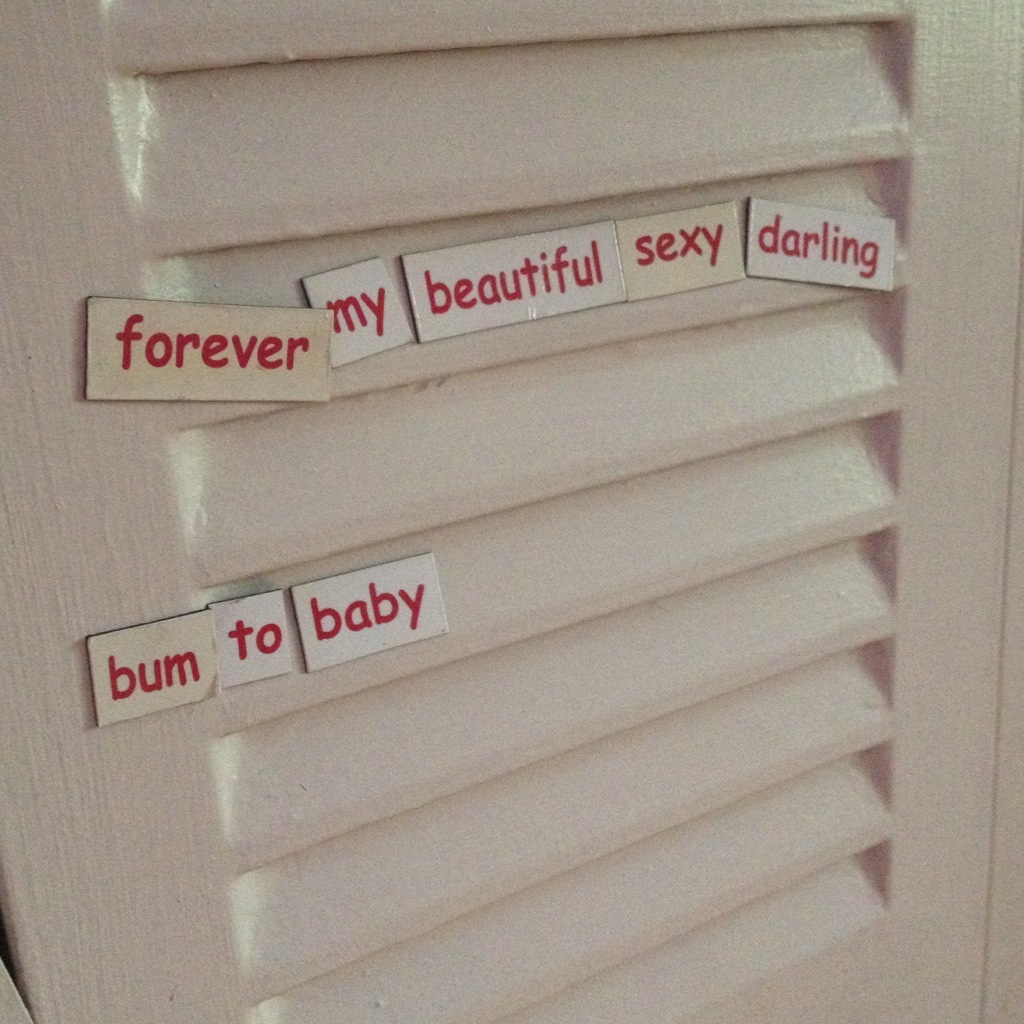
Easily the best poem I've ever seen come out of one of those magnetic poetry sets. Giving ol' Bill Shakespeare a run for his money.

Easily the best poem I’ve ever seen come out of one of those magnetic poetry sets. Giving ol’ Bill Shakespeare a run for his money. I didn’t write it, I promise.

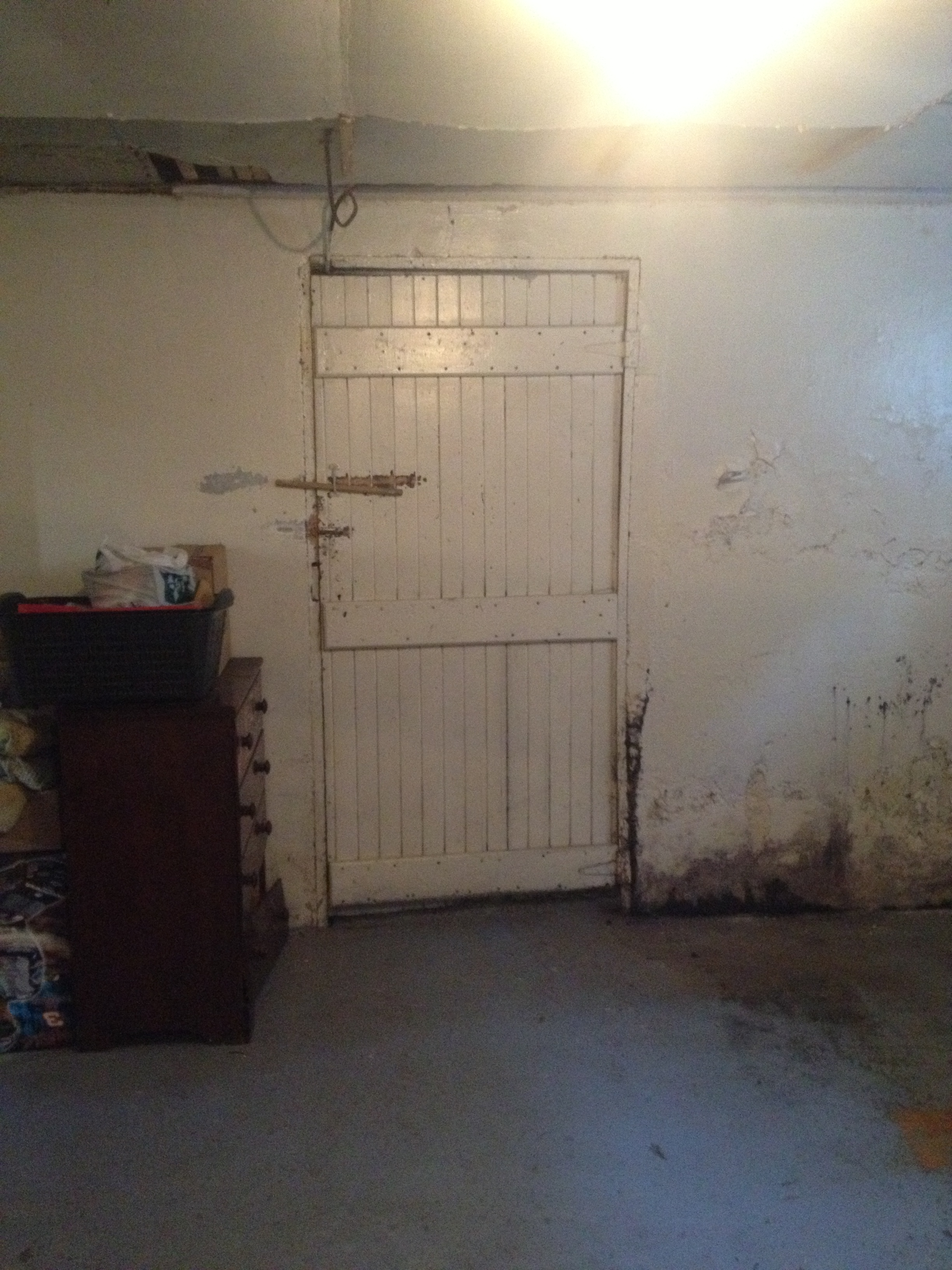
Eh, we've all seen The Goonies right? We all know what's behind that door.

Eh, we’ve all seen The Goonies right? We all know what’s behind that door.

Bathrooms are by far the greatest. Some of these don’t quite qualify as bathrooms, but hey, this is pretty far from official. These are some exquisite handyman specials.

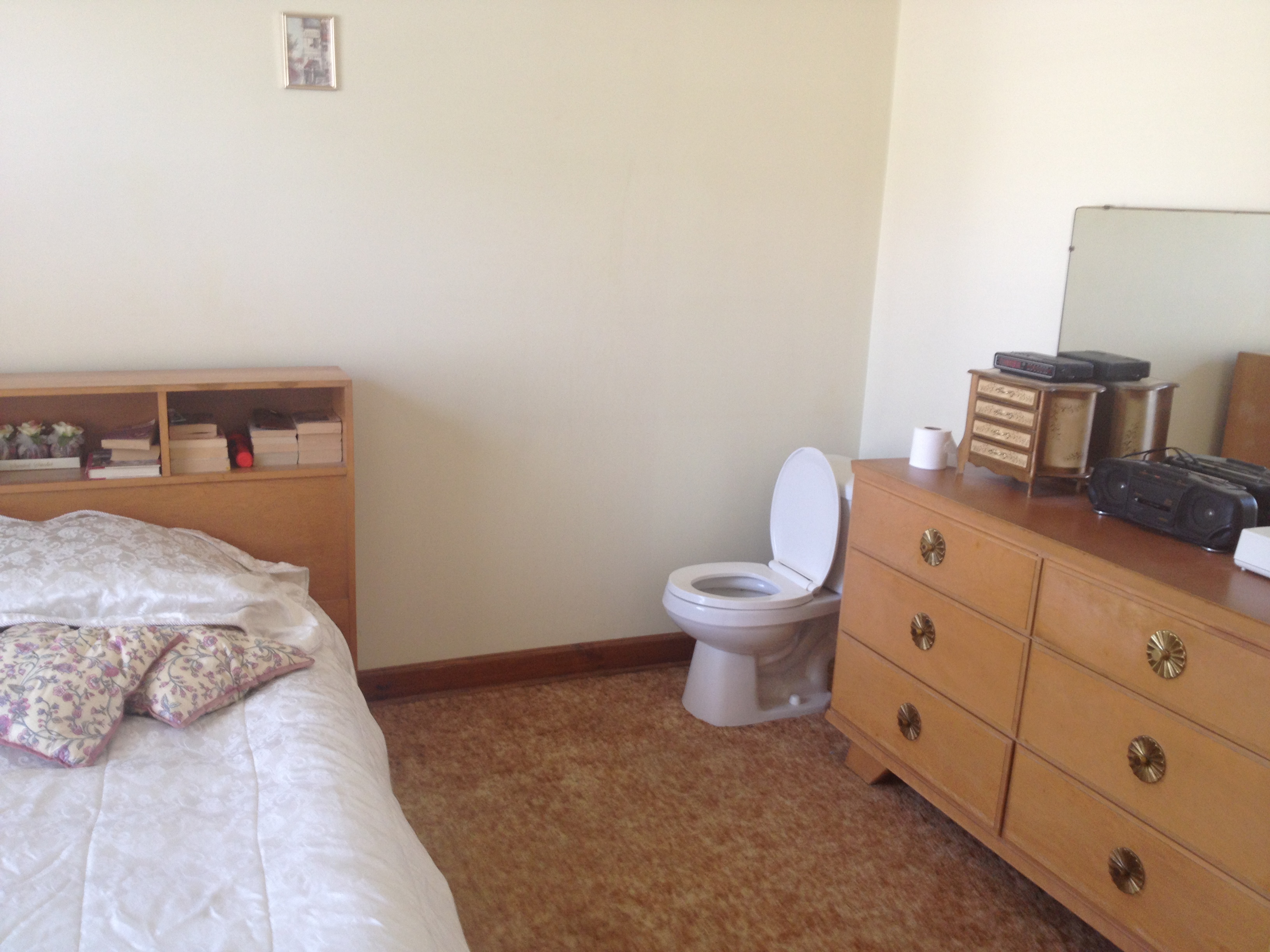
Great spot for a crapper. Bonus points for convenience. Negative points for resting the TP on the dresser. No sink by the way, hope they sprung for the 3-ply just in case.

Great spot for a crapper. Bonus points for convenience. Negative points for resting the TP on the dresser. No sink by the way, hope they sprung for the 3-ply just in case.

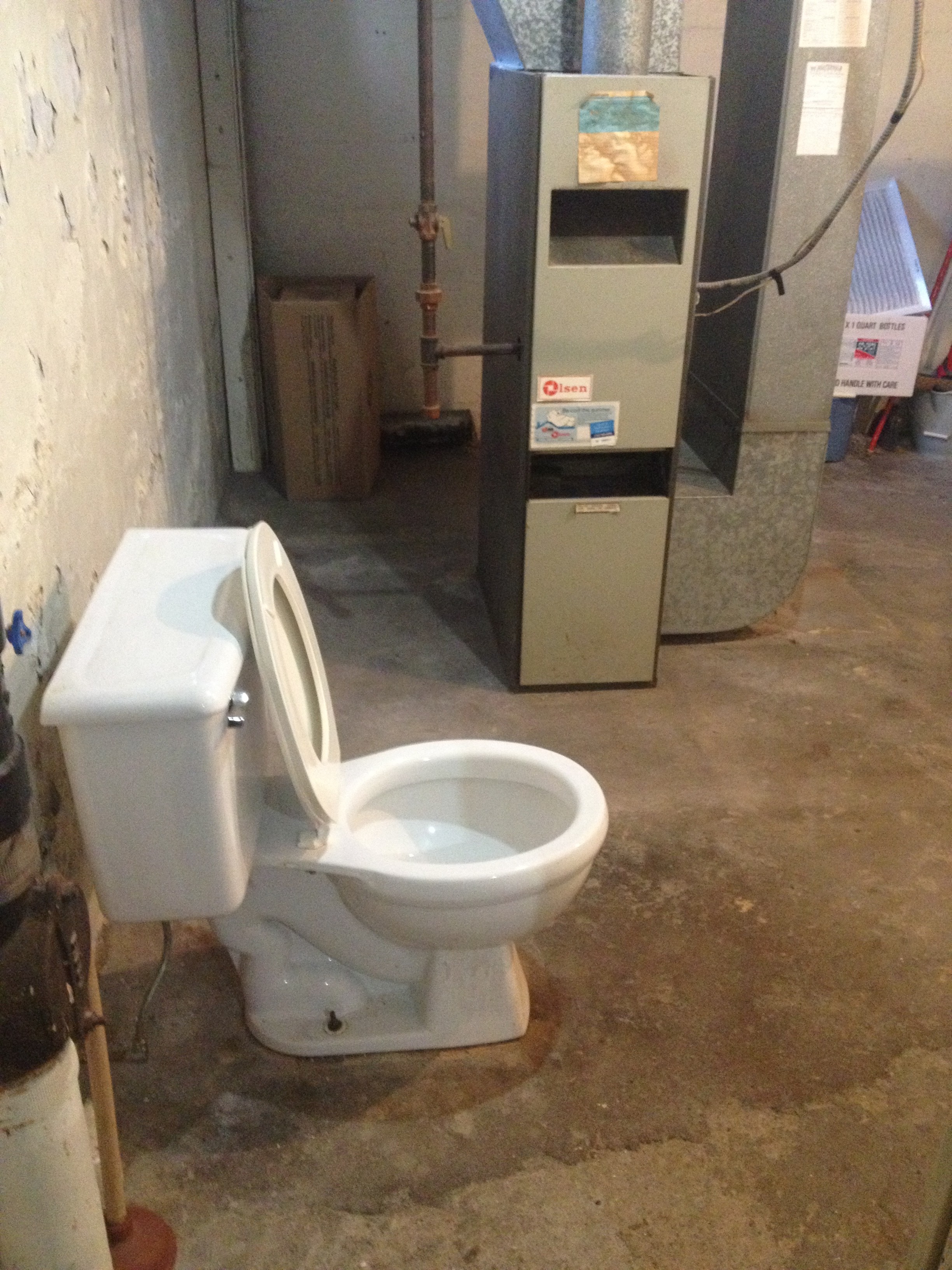
This was a working toilet. In the furnace room. Without a sink. But, you did get half a shower (read: a tiled corner with no faucets). It's not even like there was a finished area downstairs, so fortunately, I doubt this one got used too much.

This was a working toilet, with the plunger for proof. In the furnace room. Without a sink. But, you did get half a shower (read: a tiled corner with no faucets). It’s not even like there was a finished area downstairs, so fortunately, I doubt this one got used too much.

Sort of an ensuite. This'd be great for waking up in the mornings, but let's not pretend that this wasn't used as a toilet the odd time. I'm not super motivated at 2 am, either.

Kinda, sorta an ensuite if you broaden the term to the max.  I won’t lie, having a shower in my bedroom would be great for waking up in the mornings, but let’s not pretend that this wasn’t used as a toilet the odd time. I’m not super motivated at 2 am, either. Plus they’re a Leafs fan, so…

The king of DIY.

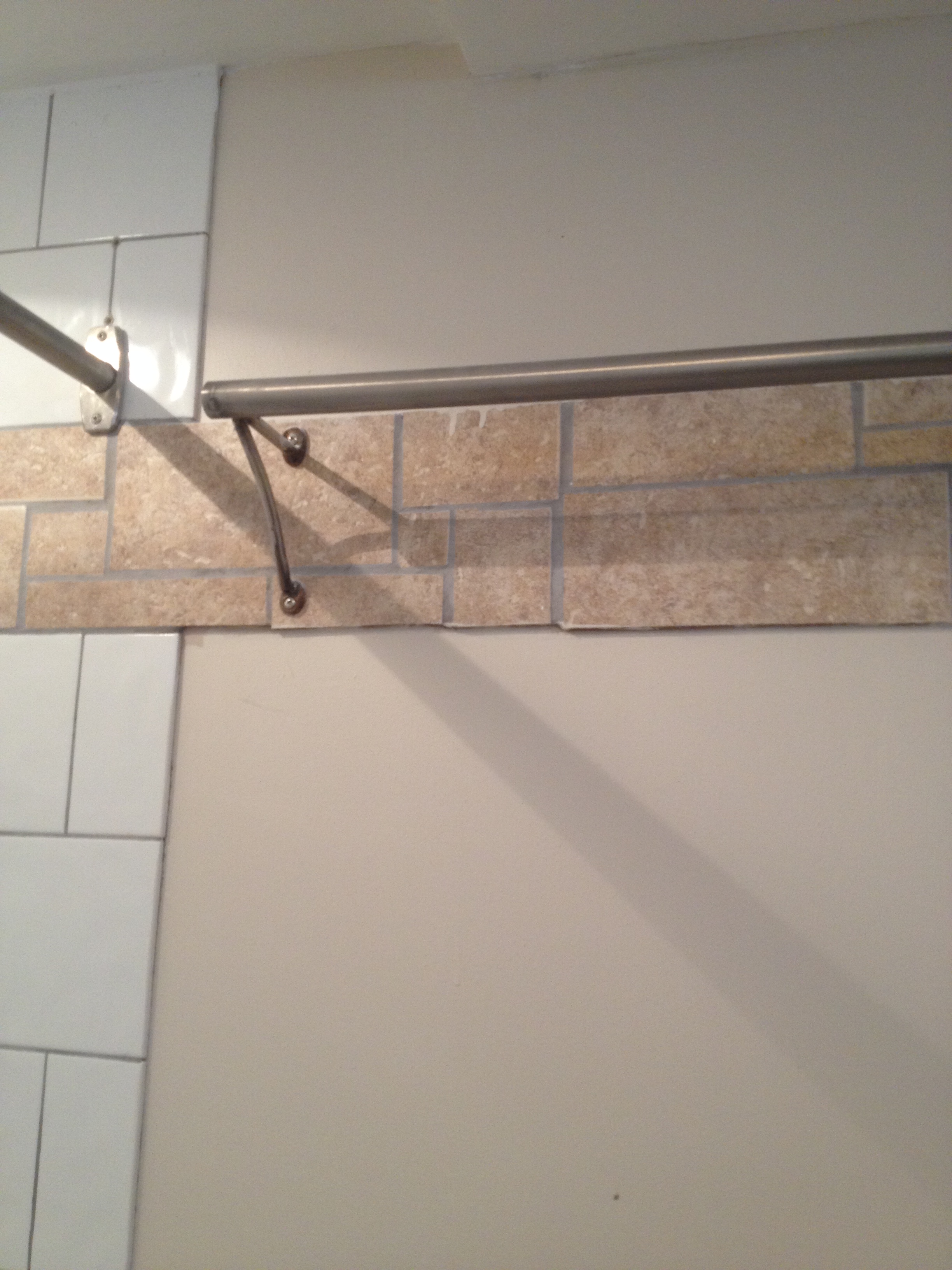
Hands down, the king of DIY. I think this guy borrowed his “tile saw’ from a tree farm. Not only does continuing the border out from the shower look hilarious, the execution rivals a kindergarten macaroni picture. Hope you’re clear of 6’4” if you plan on using the towel rack.

Zehr Bringing Life Back to Downtown Kitchener

The other day I tweeted that Carl Zehr’s legacy as it pertains to Downtown Kitchener could depend on how strong the sales of OneHundred Condominiums wind up being.

For what it’s worth, the name is derived from its address at 100 Victoria St. S; they’re well clear of 100 units (276 to be exact). OneHundred just sounds cooler. Its sister building, One Victoria is rapidly approaching a sell-out, so Momentum Developments (Red Condominium, The42) is really testing the strength of Downtown Kitchener’s condo market in the face of its unstable past.

Downtown rejuvenations have been focal points of community agendas in both Kitchener and Waterloo for about the past 10 years, with Zehr being Kitchener’s mayor for that entire duration. As his term of leadership comes to an end, the downtown core is markedly improved, though only time will tell whether it’s reached the point where people are lining up to live there.

Downtown Kitchener has seen ups and downs over the past few years as developers looked to find appropriate residential uses for properties in and around the core. Kaufman Lofts was an incredibly successfully loft conversion, and the earliest buyers in that building have seen their investment appreciate astronomically. Additionally, Arrow Lofts was another successful recent project which saw brisk sales and creative floor plans that made downtown living an easy transition for many.

On the other hand, moving deeper into the core has been a battle for City Centre Condominiums. The project has taken longer to come to fruition than first expected, and though it’s now under construction, there are a number of unsold suites in the building. It’s taken about 3 years on the market to reach a sufficient level of pre-sold units to get construction underway.

The cleanup of central & eastern Downtown Kitchener has certainly been slower than the west-side, without the main draws (Tannery/U of W/LRT/Via). To some effect, EOQ (East of Queen) may still have a similar stigma to London’s EOA (East of Adelaide). That said; it’s all part of a natural yet municipally accelerated push towards the rebirth of downtowns across the map. It’s only a matter of time until the influx of disposable income from new downtown residents promotes renovation and growth out from the Victoria/King intersection.

Uptown Waterloo is seeing this same trend, although in fairness, they’ve had quite the head start. The rebranding of Waterloo Town Square, public gathering spaces, Seagram & Bauer Lofts; all have greatly contributed to what is now a thoroughly vibrant and thriving central core. Quick-selling newcomers like RED Condominium at King & Allen have opened the door for other developers to take their shot at being the next big thing.

Reinvesting in downtowns is certainly the smart man’s approach and Mayor Zehr has led an oft-contested push in the right direction. Ten years may seem like a long time, but with some condo projects taking 5 years from sales launch to occupancy; you have to consider that development, particularly re-development, is a slow process. I would guess that OneHundred is looking at a 12-16 month sellout, which is phenomenal from a developer’s perspective. That’d be great for cementing Zehr’s legacy as one of Kitchener’s all-time greats.

“I WANT TO BUY A CONDO…


Coletara's latest Guelph condo under construction- Ten77

Coletara’s latest Guelph condo under construction- Ten77

…But I don’t know what, how or why I should buy.”

For many first-time buyers (nearly all, if we’re talking about Toronto), downsizing seniors and empty nesters, condo living is a desirable option –if not far & away the best.

For those who have never owned a home, condo ownership is essentially Home Ownership Lite. Instead of doing all the maintenance and undertaking the personal expense of a freehold home, you pay into a communal pot that takes care of most of the upkeep you’d normally have to do yourself. This is especially great if you’ve always lived at home. It gives you the chance to learn things like how to make Kraft Dinner and how an iron works, without tying yourself up worrying about the expense of a leaky roof or how not to kill a garden full of hostas & geraniums.

If you’ve owned your home for many years, I don’t need to tell you how quickly the Honey-Do list becomes a multi-page pipe dream. Besides, now that the kids are gone, it’s time for Mom & Dad to forego the house work and head down to Mexico and the island barstools with your names on them. Condo living is the paramount option for those of us who just want to lock the door and take off for weeks or months at a time. Not to mention that the communal property maintenance doesn’t eat into your time on the golf course.

So, however your condo wish came to be, I’m here to help make it a reality. With over 150 condominium transactions’ worth of both new and resale experience, I know that whichever style of condo you’re looking for, I can get you into something that’s exactly what you’re looking for.

I’ve created a package, in which you’ll find some key forms to help you differentiate various condo options as well as a glossary for terms that you may have never encountered before. There are a number of things (ie. The reserve fund) that are not necessarily public knowledge or easily accessible. That’s where the value of a good Realtor and hard-working lawyer can be of tremendous service to you. All you have to do is ask and we’re happy to track down that information on any listing you might find on Realtor.ca, in a newspaper or just by driving around the area. Remember that as a buyer, you pay no commission, as it is the seller’s responsibility to pick up that tab. Use the professional help that’s there for the taking.

If you’re ready to get started, that’s fantastic. All you have to do is give me a call and we can work as a team to take it from there. I can’t wait to hear from you.