The Best of the Worst.

I’ve seen some amazing properties, immaculate interiors and exceptional staging in my first year or so as an agent. That said, it’s far from a regular occurrence to see homes with a lot of flash and finish. In fact, there’s a lot more ridiculous stuff I’ve seen in homes for sale that either make you scoff, scratch your head, or laugh hysterically. Here’s a few of my favourites. I lost the MLS photo with a bong on a desk, so the rest of these will have to suffice. Enjoy.

IMG_1333

I assume that’s not the kid’s real name. Book was actually a hit, and they turned it into a movie. Hadn’t ever heard of it. Died laughing. Nice grin, kid.

Back before we got so sensitive about things like nipples, we'd just hang up pictures of half-nude girls in the dining room. I'm sure it reached a point where the Mrs. was wondering why eyes kept going past her at dinner. Positive note: She seems to be weathering that storm pretty well.

Back before we got so sensitive about things like nipples, we’d just hang up pictures of half-nude girls in the dining room. I’m sure it reached a point where the Mrs. was wondering why eyes kept going past her at dinner. Positive note: She seems to be weathering that storm pretty well.

This little antique demon pig had it's own spot right down beside the fireplace. I'm sure it was chock full of sentiment, since he didn't really jive with the decor.

This chubby little antique demon pig had it’s own spot right down beside the fireplace. I’m sure it was chock full of sentiment, since he didn’t really jive with the decor. What’re you looking at and WHY DO YOU HAVE 2 PUPILS?!

"Man, that light's not that bright." "K, well, let's just stick up this spare one too." This is embarrassing. Like, holy cow. Change the fixture, cap one, get higher wattage bulbs, anything but sticking up two generic, mismatched, misaligned ceiling fixtures. So brutal.

“Man, that light’s not that bright.”
“K, well, let’s just stick up this spare one too.”
This is embarrassing. Like, holy cow. Change the fixture, cap one, get higher wattage bulbs, anything but sticking up two generic, mismatched, misaligned ceiling fixtures. So brutal. Love to be a fly on the wall in that decision-making.

Easily the best poem I've ever seen come out of one of those magnetic poetry sets. Giving ol' Bill Shakespeare a run for his money.

Easily the best poem I’ve ever seen come out of one of those magnetic poetry sets. Giving ol’ Bill Shakespeare a run for his money. I didn’t write it, I promise.

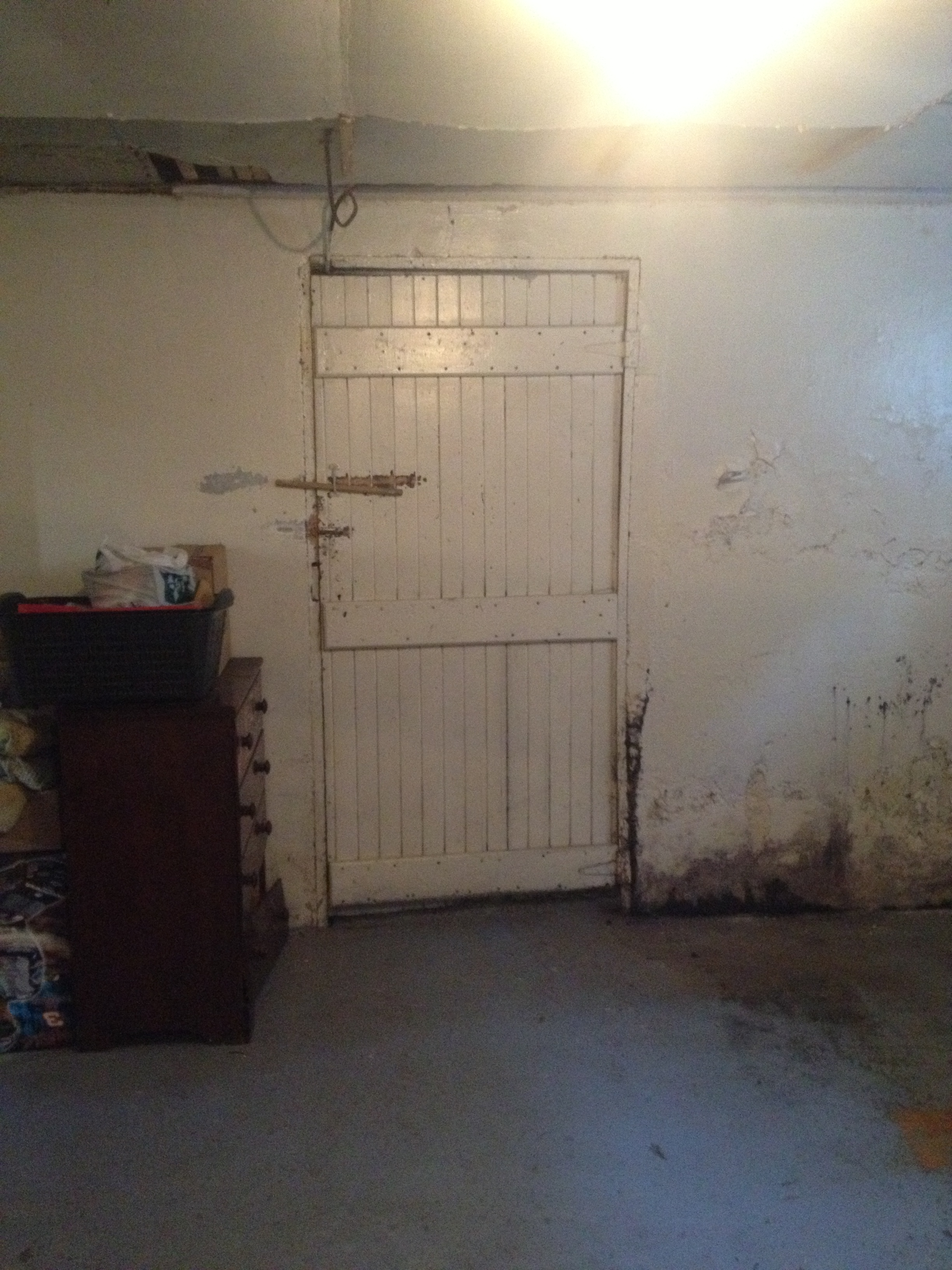
Eh, we've all seen The Goonies right? We all know what's behind that door.

Eh, we’ve all seen The Goonies right? We all know what’s behind that door.

Bathrooms are by far the greatest. Some of these don’t quite qualify as bathrooms, but hey, this is pretty far from official. These are some exquisite handyman specials.

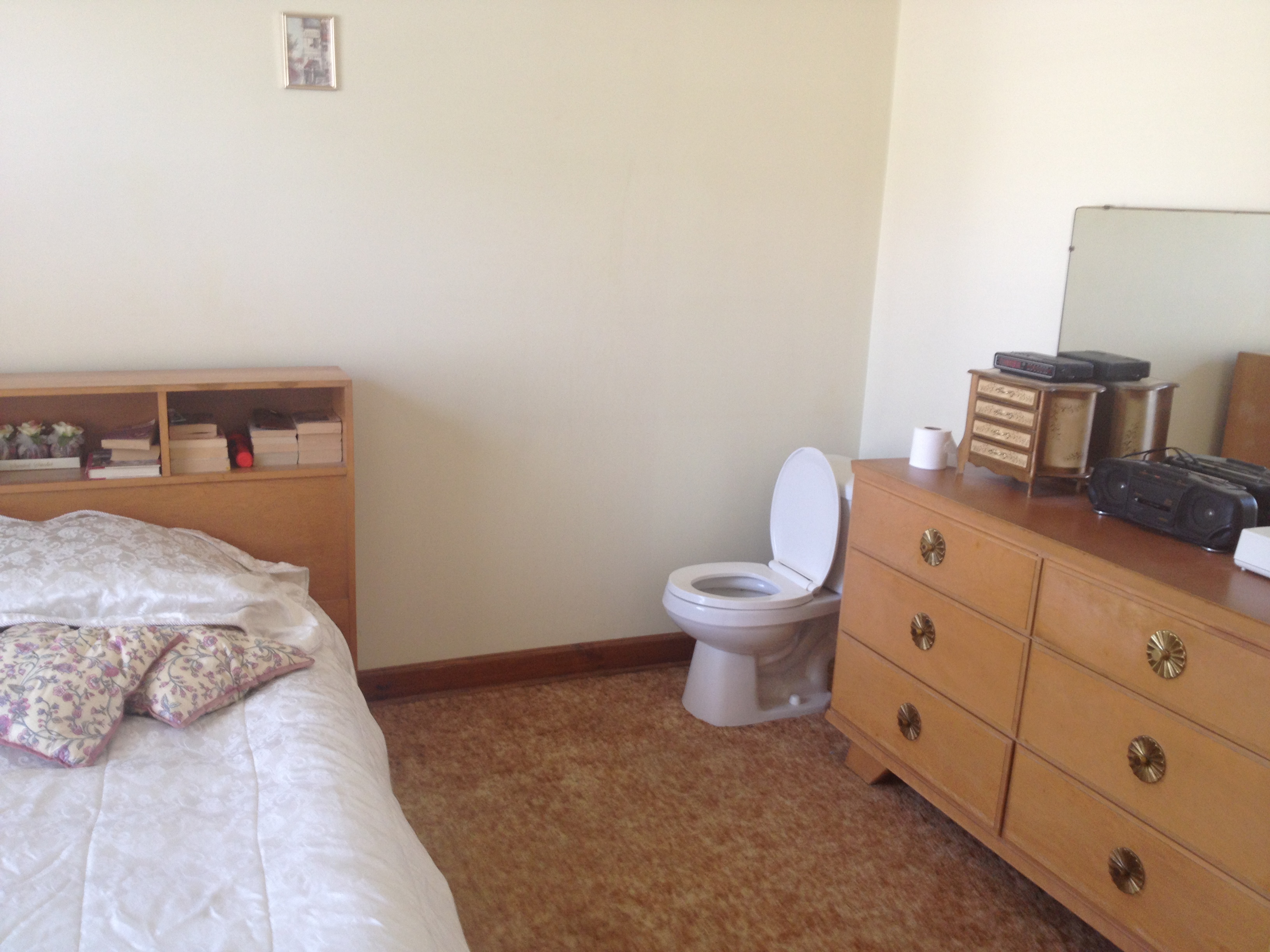
Great spot for a crapper. Bonus points for convenience. Negative points for resting the TP on the dresser. No sink by the way, hope they sprung for the 3-ply just in case.

Great spot for a crapper. Bonus points for convenience. Negative points for resting the TP on the dresser. No sink by the way, hope they sprung for the 3-ply just in case.

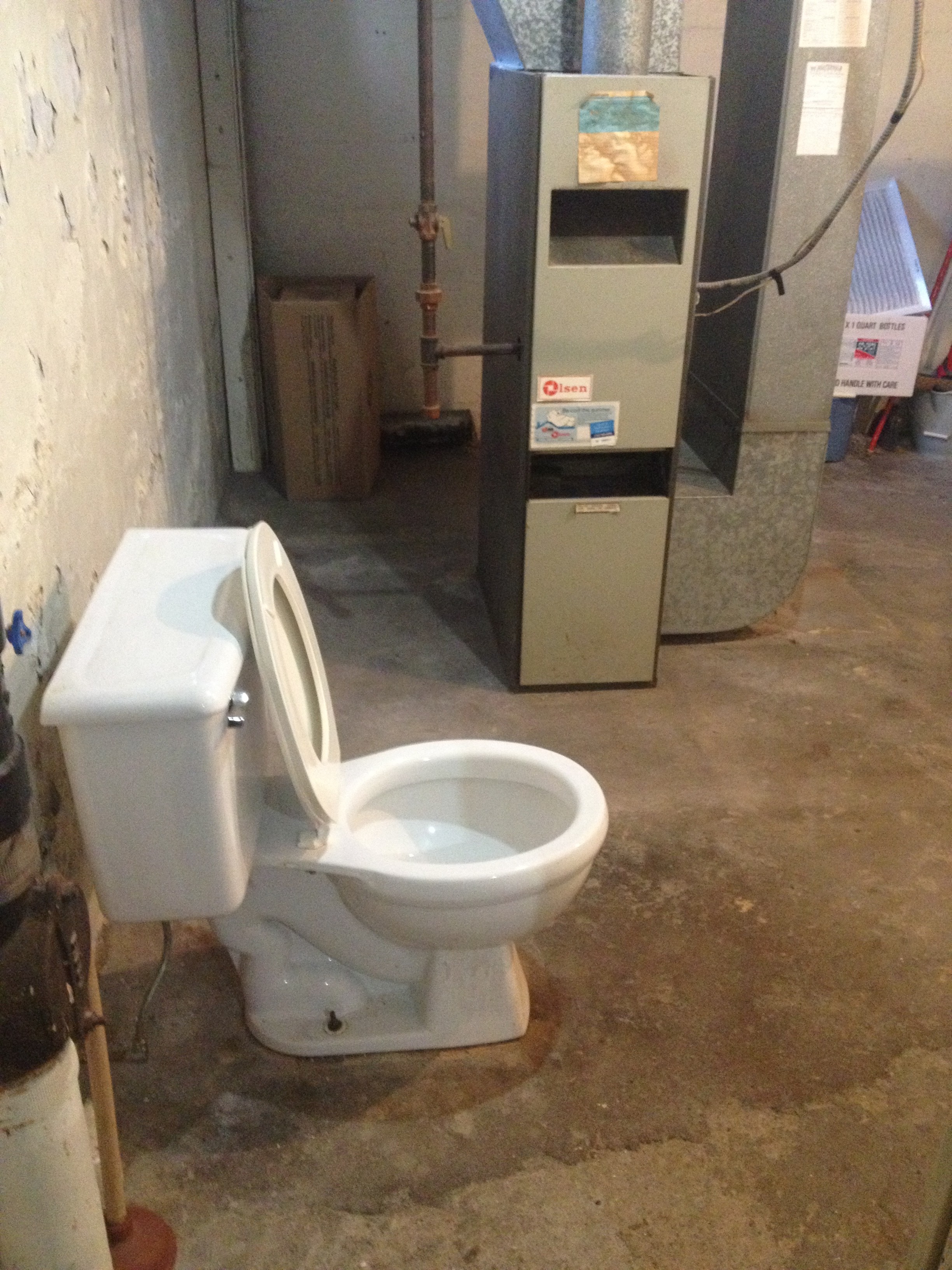
This was a working toilet. In the furnace room. Without a sink. But, you did get half a shower (read: a tiled corner with no faucets). It's not even like there was a finished area downstairs, so fortunately, I doubt this one got used too much.

This was a working toilet, with the plunger for proof. In the furnace room. Without a sink. But, you did get half a shower (read: a tiled corner with no faucets). It’s not even like there was a finished area downstairs, so fortunately, I doubt this one got used too much.

Sort of an ensuite. This'd be great for waking up in the mornings, but let's not pretend that this wasn't used as a toilet the odd time. I'm not super motivated at 2 am, either.

Kinda, sorta an ensuite if you broaden the term to the max.  I won’t lie, having a shower in my bedroom would be great for waking up in the mornings, but let’s not pretend that this wasn’t used as a toilet the odd time. I’m not super motivated at 2 am, either. Plus they’re a Leafs fan, so…

The king of DIY.

Hands down, the king of DIY. I think this guy borrowed his “tile saw’ from a tree farm. Not only does continuing the border out from the shower look hilarious, the execution rivals a kindergarten macaroni picture. Hope you’re clear of 6’4” if you plan on using the towel rack.

Zehr Bringing Life Back to Downtown Kitchener

The other day I tweeted that Carl Zehr’s legacy as it pertains to Downtown Kitchener could depend on how strong the sales of OneHundred Condominiums wind up being.

For what it’s worth, the name is derived from its address at 100 Victoria St. S; they’re well clear of 100 units (276 to be exact). OneHundred just sounds cooler. Its sister building, One Victoria is rapidly approaching a sell-out, so Momentum Developments (Red Condominium, The42) is really testing the strength of Downtown Kitchener’s condo market in the face of its unstable past.

Downtown rejuvenations have been focal points of community agendas in both Kitchener and Waterloo for about the past 10 years, with Zehr being Kitchener’s mayor for that entire duration. As his term of leadership comes to an end, the downtown core is markedly improved, though only time will tell whether it’s reached the point where people are lining up to live there.

Downtown Kitchener has seen ups and downs over the past few years as developers looked to find appropriate residential uses for properties in and around the core. Kaufman Lofts was an incredibly successfully loft conversion, and the earliest buyers in that building have seen their investment appreciate astronomically. Additionally, Arrow Lofts was another successful recent project which saw brisk sales and creative floor plans that made downtown living an easy transition for many.

On the other hand, moving deeper into the core has been a battle for City Centre Condominiums. The project has taken longer to come to fruition than first expected, and though it’s now under construction, there are a number of unsold suites in the building. It’s taken about 3 years on the market to reach a sufficient level of pre-sold units to get construction underway.

The cleanup of central & eastern Downtown Kitchener has certainly been slower than the west-side, without the main draws (Tannery/U of W/LRT/Via). To some effect, EOQ (East of Queen) may still have a similar stigma to London’s EOA (East of Adelaide). That said; it’s all part of a natural yet municipally accelerated push towards the rebirth of downtowns across the map. It’s only a matter of time until the influx of disposable income from new downtown residents promotes renovation and growth out from the Victoria/King intersection.

Uptown Waterloo is seeing this same trend, although in fairness, they’ve had quite the head start. The rebranding of Waterloo Town Square, public gathering spaces, Seagram & Bauer Lofts; all have greatly contributed to what is now a thoroughly vibrant and thriving central core. Quick-selling newcomers like RED Condominium at King & Allen have opened the door for other developers to take their shot at being the next big thing.

Reinvesting in downtowns is certainly the smart man’s approach and Mayor Zehr has led an oft-contested push in the right direction. Ten years may seem like a long time, but with some condo projects taking 5 years from sales launch to occupancy; you have to consider that development, particularly re-development, is a slow process. I would guess that OneHundred is looking at a 12-16 month sellout, which is phenomenal from a developer’s perspective. That’d be great for cementing Zehr’s legacy as one of Kitchener’s all-time greats.

“I WANT TO BUY A CONDO…


Coletara's latest Guelph condo under construction- Ten77

Coletara’s latest Guelph condo under construction- Ten77

…But I don’t know what, how or why I should buy.”

For many first-time buyers (nearly all, if we’re talking about Toronto), downsizing seniors and empty nesters, condo living is a desirable option –if not far & away the best.

For those who have never owned a home, condo ownership is essentially Home Ownership Lite. Instead of doing all the maintenance and undertaking the personal expense of a freehold home, you pay into a communal pot that takes care of most of the upkeep you’d normally have to do yourself. This is especially great if you’ve always lived at home. It gives you the chance to learn things like how to make Kraft Dinner and how an iron works, without tying yourself up worrying about the expense of a leaky roof or how not to kill a garden full of hostas & geraniums.

If you’ve owned your home for many years, I don’t need to tell you how quickly the Honey-Do list becomes a multi-page pipe dream. Besides, now that the kids are gone, it’s time for Mom & Dad to forego the house work and head down to Mexico and the island barstools with your names on them. Condo living is the paramount option for those of us who just want to lock the door and take off for weeks or months at a time. Not to mention that the communal property maintenance doesn’t eat into your time on the golf course.

So, however your condo wish came to be, I’m here to help make it a reality. With over 150 condominium transactions’ worth of both new and resale experience, I know that whichever style of condo you’re looking for, I can get you into something that’s exactly what you’re looking for.

I’ve created a package, in which you’ll find some key forms to help you differentiate various condo options as well as a glossary for terms that you may have never encountered before. There are a number of things (ie. The reserve fund) that are not necessarily public knowledge or easily accessible. That’s where the value of a good Realtor and hard-working lawyer can be of tremendous service to you. All you have to do is ask and we’re happy to track down that information on any listing you might find on Realtor.ca, in a newspaper or just by driving around the area. Remember that as a buyer, you pay no commission, as it is the seller’s responsibility to pick up that tab. Use the professional help that’s there for the taking.

If you’re ready to get started, that’s fantastic. All you have to do is give me a call and we can work as a team to take it from there. I can’t wait to hear from you.

Multiple-Offers: Winning, or At Least, Not Losing

Real_Time_BiddingBy now you’ve heard about the wild, buyer free-for-all that is the Toronto real estate market. The number of buyers looking to make a move combined with a shortage of lucrative inventory has created a sellers’ market to end all sellers’ markets. We’re starting to see multiple offer situations on Toronto condos again, a trend not seen in recent years as condo supply reached some record highs.

Chances are you may have seen other stories about multiple offers, but none compare to this one from last week that saw a house in the Yonge & Lawrence area, listed at $699,900, sell for $1,366,000 with 72 offers. SEVENTY-TWO.

I have no idea how this happens. At offer number 10, your odds as a buyer are incredibly slim, to the point that you probably shouldn’t bother. But hey, there’s a chance right? Apparently then, another 62 people proceeded not to care much for the odds either.

Naturally, there were likely a ton of offers in there that were just doing the sellers a favour by boosting the quantity of competition, without being a real threat to the serious buyers. The offers that included sale of property, financing, or insurance conditions would fall into that category. So would anything around asking price. Regardless though, they were there, and on every other bidder’s mind when it came to formulating an offer price.

In competition, the cleaner an offer is, the more lucrative the offer, as oftentimes conditions can be as important as price. When there are 72 offers to choose from, the seller isn’t going to accept a condition that forces them to wait for a house in a less sought after to sell. They’re taking the sure thing.

By far the biggest challenge buyers face in multiple offer scenarios is the blind bidding process. This will always garner the optimal result for the seller and will leave at least one bidder with a bad taste in their mouth, and hopefully that’s if they lose. In the story above, I’m sure all 72 will end up with some degree of animosity. From the guy who bid $675k conditional on the sale of his place in Georgetown; to the woman with the second best offer who lost by a few grand; to the winners who’ll look back at the $1.1M house they just paid an extra $260k for, and who will then be putting another few hundred thousand into fixing it up; they all lose. Working in their sellers’ best interest, listing agents don’t disclose any terms of the competing offers to the buyer agents, which forces buyers to put their best foot forward right off the bat. The best case for the buyer in multiples is that they get a house they love for what it’s worth. With 72 offers, that’s not happening.

Congrats to the listing agent for drumming up that many offers and doing their seller client a huge favour. At the same time, buyers and their agents need to do a better job of knowing what market value on a house like that is. Ultimately, list price doesn’t mean a thing. Only people who are willing to pay what a house is worth should be offering, and I’m willing to bet that 80% of those offers were nowhere close. As Toronto Realtor David Fleming (@TORealtyBlog, a solid twitter follow) was quoted saying, “we’re in a hot market, but no house is hot enough to get 72 offers”.

Fortunately, most of you aren’t buying in Toronto and will probably never encounter such an absurd scenario. There is a chance though, depending on location and market conditions, that you could find yourself in competition with a few other buyers. Let’s take a look at that process and what you can do to win out, or at least feel good about walking away.

As a buyer, you really need to weigh your interest in a property before committing to a multiple-offer situation in an attempt to buy a property. If you really love the house, chances are you’ll find a way to come up with a few thousand dollars if you need it. Because of the competitive nature of things though, it’s important not to get caught up in winning but rather ensuring you still like the house you buy at the end of the day.

When sellers receive multiple offers to purchase they basically have 4 options:

  1. Accept the best offer
  2. Send any number of the offers back for buyers to try again
  3. Counter-offer on the best offer
  4. Work with none of the offers

Number 4 is pretty rare. After all, as a seller, if you go routes 2 or 3, you’re not committing to any of the offers either, but it’s much better to work with an offer you have in front of you than to wait and hope a few more materialize. Your first offer is usually your best offer, so if you can pit more than one buyer against each other, you’re crazy not to.

With option 3, if a seller counters your offer, it gives you a sliver of leverage since you know that there are no other offers in play at the moment, and that the seller has lost their competitive scenario. However, you know that those offers could come back in at any time if you don’t accept the sellers’ counter offer. The seller is basically telling you that your offer was the best, and may be making a change to the closing date or a condition that’s simply there for you to accept and win the battle.

Leverage as a seller is paramount. I’ve offered with clients in a multiple-offer scenario which we lost, but when the other offer fell through, we went back in $5,000 lower than our original offer knowing that we had no competition. My clients ultimately got the house for $3,000 less than their original offer. If you’re a seller, you better make damn sure the counter is going to be accepted if you choose to go with option 3.

If the sellers send you and others back to submit a new offer, it’s for one of two reasons: Either none of the offers were acceptable OR multiple offers were very close to each other and the seller thinks they can get higher bids back from one or more to put them over the top. It’s a bit of a slap in the face and maybe a tad greedy, but if the seller thinks that buyers’ interest outweighs the offense, it’s a seller-friendly strategy that they can employ.

As a buyer, number 1 is the easiest to navigate if you win, but sometimes hard to swallow if you don’t. Eventually your agent is going to find out what it sold for (potentially right away if the winning offer is condition-free) and the worst thing that can happen is your agent giving you the sale price and it being something you would’ve been willing to pay. There you’re back to square one. Two of my listings have sold with multiple offers in the last 2 weeks, and the phone calls to the losers in the bidding process are usually tough ones to make. Let’s make sure that phone call doesn’t happen.

Multiple-offers can be a sticky situation as a buyer, so make sure you’ve got an agent who’s been there before and can help you strategize to achieve the best outcome for you. You’ll be glad you did.

First-Time Buyers: Mortgages, Part One

Yeah. Part One.

Mortgages are quite the animal, so there’s a lot to know before you dive right into one. They’re also not super exciting, so it’s probably for the best that we split it up. We don’t need anyone giving up 2000 words in when we touch on collateral for the 8th time.

I figure we’re best to start with how to determine what we’ll qualify for, and then get into manipulating & expanding that number if your budget doesn’t suit your must-have list in Part Two.

8342940With real estate prices climbing ever higher, seemingly across the board, the Conservative government under Finance Minister Jim Flaherty made an array of changes to artificially cool the housing demand in 2012, reducing the risk of a bubble and simultaneous crash as seen south of the border. Despite it being against traditional Conservative financial policy to tamper with free markets, the government implements these new measures and made home ownership more difficult for first-time buyers and others alike.

The argument, naturally, is that the consumers affected by these changes likely shouldn’t have been buying properties anyway, since their situations were associated with higher risks of defaults and foreclosures. Personally, I feel these situations are better assessed on a person-to-person basis in terms of who can adapt their situations and survive rate hikes or reductions in income. At the same time, you have to respect the government applying the same rules to everyone, though it hurts people who otherwise could’ve managed.

In determining how much you can afford to spend on a home, lenders typically focus on two main ratios. Gross Debt Service, or the amount of the liabilities tied to your home, is currently capped at 39%. This means that the amount of your proposed mortgage payments plus your condo fees (if applicable), property taxes, and utilities should not exceed 39% of your household income. Total Debt Service, the more critical number, is also capped at 44%.This includes the aforementioned GDS components, but also any other personal liabilities you may have. Student loans, credit card debts, lines of credit and car loan payments are the most common additional charges in the TDS calculation. Typically a lender will look for these ratios to be at 32% at 40% respectively, which can be increased to the maximum based on high credit scores. We’ll address those in part two.

A major reason I feel the Flaherty changes were unnecessary is due to the little known benchmark, or qualifying rate. If you’ve never bought a home before, chances are you’ve never heard of this number, the one that likes to deflate expectations for new mortgagors. Here’s a tip: If you’re looking into properties to purchase and you use the mortgage calculator on a website/app like Realtor.ca, use the benchmark interest rate to qualify yourself, as that’s what your lender will be forced to use as well. Even though your ratios may be strong at an interest rate of 2.5% on a 5 year variable rate mortgage, you’ll have to have favourable GDS & TDS ratios based on the higher rate. The benchmark rate, which is the 5-year term fixed posted rate (currently 5.34%) is in place to protect against rate hikes, effectively the same thing Flaherty’s changes were put in place to do.

Once you’ve established what you believe you can afford, the process of choosing your actual mortgage begins. Comparison shopping is essential, and one of the best ways to do this is through a mortgage broker. Ben Melick of Mortgage Intelligence (Kitchener-Waterloo), Randy von Heyking of Mortgage Alliance and Rob Campbell of the Mortgage Wellness Group (Guelph) are all stand-up options for you to consult. It’s not even a bad idea to consult with one before you try and figure out what you can afford. They’ll help you through it. Mortgage brokers understand each product available and can point you in the direction of the product that’s right for you. If you already do all your banking and investing with the same major bank, they could also be a good option for you, since that can typically give you some leverage either for mortgages or other services. They’re not always the lowest rates, in fact they’re usually not, but at least you can be comfortable in having a one-stop shop for your finances and they can easily be managed all at once. That said, if you’re indifferent between loyalties to a bank and trying a mortgage broker, watch this CBC Marketplace episode (Segment 2, about 5 minutes) on big bank mortgages and go from there. It should help you make up your mind.

In Part Two we’ll look at credit scores: how they’re calculated, their impact and how to improve them; various types of incomes and how lenders view them; co-signers, which more and more of us have; mortgage insurance and high-ratio premiums vs. low-ratio mortgages. Let’s be honest though, mortgage posts can only be so long.

4 Condo Buying Questions You Should Know the Answer To

Dusk 109oz Rendering.jpgLet’s start with the obvious: Buying a condo has a number of key differences from buying a freehold detached home. As with any major purchase, it’s certainly important to do your research before jumping into anything with both feet. Being ill-prepared can lead to costly mistakes, especially when our home is the biggest investment most of us ever make.

Below is a list of important questions to ask prior to buying into a condo development:

What is a condo?

Let’s start from the beginning on this one. The word “condo” often gets associated with either a towering residential building with a hundred-plus units, or a beachside villa. Great as both may be, “condo” -or condominium, if you want to sound refined/bore people- actually refers to the type of ownership you’re buying into, not the building itself. Condos can even include townhouse complexes or entire communities.

Not only do you own your own “unit” within a complex, you also own a proportionate share of the common areas. In a building, this can include the elevators, hallways, amenities, etc., as well as the exterior land (parking lot, greenspace, landscaping). As a buyer, you become responsible for the maintenance of your unit, but also for common areas, often by way of paying common expenses or condo fees to the condo corporation or a property management company.

What do condo fees include?

condofeesIn every condo, there are costs beyond your monthly mortgage payment and property taxes that you must consider. Both the amount and components of a condo fee can vary greatly, depending on where you buy. One of the biggest considerations to make is the types of amenities you desire. A condo with high-end amenity spaces (lobby, theatre, etc.) will naturally have higher condo fees than a building which doesn’t have any amenities of note. Two of the biggest drivers of condo fees are concierge service and pools. While they’re nice to have, consider how often you will use a pool in your building, and make sure the additional expense is justifiable.

The age of a building can also increase the condo fees. While it may seem counter-intuitive to pay more to own an older unit, an older building requires greater maintenance expenses. Also, look over the financials and see the accumulation of the condo’s reserve fund. A reserve fund covers major expenses like a new roof or the re-finishing of a parking lot. Without a strong reserve fund, you could be on the hook for an unforeseen rise in your condo fees, should either of those need replacing. I’ve seen condos with locked up pools and hot tubs because jets or filtration systems have broken, there was no money in the reserve for them, and the residents that didn’t use them refused a special assessment to pay for it.

On top of maintenance and amenity costs, and reserve fund contributions, some condos will have utility charges bundled into the condo fees as well. This makes for a huge difference, especially if one $300 condo fee includes heating, cooling and water; and another one doesn’t.

Bottom line, find out what is included in your condo fees, and what you’ll have to pay on top. It’ll save you a lot of hassle down the road.

Will I be subjected to any rules or regulations?

The simple answer here is: “Probably, yes”. The number and flexibility of the rules varies from condo to condo, but there will likely be some degree of control put in place. Some of the most common rules surround:

Unit appearance (door/hallway decorations, window coverings, balcony contents)

Pets (size, number, noise)

Access (number of visitors, guest parking)

Noise (party limitations, quiet hours, amenity room closings)

It’s important that you find a condo that suits your lifestyle. After all, it’s a major key to enjoying your new living arrangement. There’s nothing worse than feeling restricted within your home, so make sure that the rules are conducive to the way you live.

What’s a better purchase, a new condominium or a re-sale?

At the risk of being blatantly non-committal, it’s hard to say whether one choice is better than another.

If you’re looking at a new build, there’s usually a cost benefit to buying pre-construction. Builders will offer lower prices earlier in the process and some buyers will flip the condos upon completion for a profit. If you buy pre-construction as well, you’re open to a greater selection variety. Not only can you choose the floor and location of your suite in the building, but you can also select the interior finishes such as flooring, cabinetry and countertops. The new building is also protected by the Tarion New Home Warranty program and condo fees are usually lowest at the birth of a new building due to the lack of depreciation and wear on structures & systems.

On the other hand, there are a number of advantages to buying a condo unit that has already been completed, whether new or previously lived in. For one, your occupancy or closing date will be fixed. In a new build, the builder can delay occupancy given adequate notice and building registration can require a certain number of occupied units before the purchase actually closes. Until the building is registered, buyers who live in the building pay an occupancy fee which basically equates to rent until the mortgage can be applied to the deeded unit. Deposits held in trust for a resale are often much lower than the required deposits in a pre-construction project. Not to be confused with a down payment, the deposit a builder requires can vary from about $20,000 to 20% depending on each builder’s unique structure. On a resale, a $5k deposit will usually suffice until closing. Older buildings often have larger unit sizes, and you can actually tour the suite prior to buying. More and more builders are creating model suites or vignettes; but resales allow you to experience the actual unit, its colours, sizes and views prior to pulling trigger on a purchase.

Whether you buy a new or re-sale condo, here are a few personal tips:

1. Builders always have a target market in mind. Get a feel for what that market is, so you live in an atmosphere wherein you’re completely compatible. If you’re a 20-something, a trendy downtown condo may be more suitable than a suburban tower with amenities geared to older buyers.

2. Spend some time in the unit, especially if it’s your first condo. Moving can be pricey, you want to make sure you get it right the first time. And a condo can be more of an adjustment for some than others. Take a coffee and a book, sit there and see if you can picture yourself spending time in your new home. If not, then maybe that unit’s not quite right for you.

3. Look at a few condos. Especially with new developments, the first impressions are great. Everything is clean and new. But that fades, so make sure the meat and potatoes of the unit is to your liking as well. By comparing multiple buildings and becoming a more educated buyer, you certainly decrease your chances of buyers remorse.

4. Act quickly with new developments. Not to contradict my previous point, but if you really like a unit, chances are someone else will too. Odds are, you can get a few of those units in the building, but not necessarily with the same view or options. Once you’ve decided that a condo is right for you, try and see a few in a short time. It makes it easier to compare and feel comfortable in that decision. New developments here allow a 10-day “cooling-off” period wherein you can change your mind and back out of a deal without penalty. Prices of new developments don’t go down after the launch, they only go up. And after all, you’d hate to miss out on that perfect unit.


First-Time Buyers: Negotiating Your First Purchase

Negotiating a First Home PurchaseStellar, you’ve found the place for you. Maybe it’s home for 3 years, maybe for 10; but after all the searching on Realtor.ca, open houses, newspapers, private showings, you know this is the one you want. Now the question becomes, how do you lock it up and make it yours?

There two big factors in a first-time buyer’s favour when it comes to negotiating a deal on that perfect place. The first is flexibility, the second: cash.

I don’t mean cash as if the world is full of loaded 20-somethings, but rather that the math is all done and the money is there. You’ve been pre-qualified for a mortgage, you don’t have a house to sell and it’s just a matter of pulling the trigger. Many buyers who already own a home aren’t willing to sign an agreement on a new place until they have some assurance that they won’t be burdened with a pair of mortgages for an extended period of time. This means any first-timer’s offer at a similar price-point is more lucrative than one conditional on the buyer selling their current place. The less the seller needs to wait for and worry about, the better, and usually they’d be willing to sacrifice a few thousand dollars for a firm deal.

First-timers are also a pretty flexible bunch. Without kids in the picture, there’s less consideration for the timing of the move, which tend to occur most often when kids are on summer holidays. With a lease, or living at Mom and Dad’s, you can be flexible with your closing date to suit the sellers’ needs. If the sellers want to close in 2 weeks and all you have to do is lug your futon out of your parents’ basement, there’s nothing stopping you from doing it, and that’s rare.

The same flexibility that lets you choose your move in date can also give you the freedom to walk away from a bad deal. Use that to your advantage. If you’re shopping for a townhouse or in a newer subdivision, it’s easy to find the same floor plan for sale nearby. Don’t feel it necessary to overpay for a home that there are an abundance of, especially if you can afford to wait for another similar one to pop up.

There are other factors that can impact your strategy in negotiations- one of which is multiple representation. When an agent represents both the seller and you (as a buyer), they are bound in terms of what they can disclose about the other side. Essentially, calling the listing agent to see a property will put you in this situation every time; and it effectively removes the agent from the negotiating and turns them into a mere paper mule. Multiple representation limits the advising and strategy-planning role of the agent. Not only are listing agents constrained in consulting you as a first-time negotiator, they have an added motivation to put you in the house they’re selling. As a result, you’re better served as a buyer using an agent who will shop different houses with you- establishing a strong understanding of each other and strengthening trust along the process. That way, when you do settle on the right place, they know your needs, motivations and budget and also how to best negotiate on your behalf, representing you alone.

A good offer price is always subjective. Even though 2 agents on either side of the negotiation both likely know what the home is worth, they are only 2 of the 4 players in the game. Sellers may require a certain sale price to validate their move, and buyers often work within set budgets, so houses don’t always sell for their true “value”. Offering on a house differs given a number of factors including buyer & seller motivation, the length of time the house has been on the market, market value, the number of other interested parties, etc. Obviously you can offer lower on a home with a motivated seller whose house has been on the market for 3 months with no action than you should on a property that just hit the market and is likely to garner multiple offers. Situational awareness is key, and a good Realtor will know the signs to look for to get you the best deal.

Strong negotiating is an acquired skill. You don’t want to learn that the hard way on your first home purchase. Consider expert advice and put yourself in the best situation to make an informed decision, whether it be on your own or with an ally such as a Realtor on your side. It won’t cost you anything, so bringing in an agent to work for you is common sense. Failing to do you homework can lead to you not enjoying your first home for all it should be. Just remember, you only get one chance to buy your first house.

Which Renovations Should I Do Before I Sell? Probably None.

One of the most common questions I get from potential home sellers is: Should I do “project x” or leave it for the next owner? It’s not necessarily clear cut, but if you’re going to do something, you’ve got to do it well, and have buyers perceive it as better than the alternative. If you’re contemplating upgrading your linoleum flooring to higher-end linoleum, you might as well be taking cash from an ATM and stuffing it down a manhole. Things buyers would consider doing anyways (updating appliances, stone countertops, tearing out carpets for hardwood) are the way to create value.

Buyers these days have more refined taste than ever before, but often you’ll find two types of buyers: Those that want to save money and buy a home they can renovate, and those that are prepared to pay, so long as they don’t have to lift a finger once they move in. If you’re setting your home up to be somewhere in between these two markets, you’re destined to lose. With the former, they’re not typically willing to pay for things they’re just going to do over again. And buyers looking for turn-key homes don’t really care if the home is flashy if it isn’t cohesive.

For example, I went through a house with a re-done kitchen just this week and though the kitchen couldn’t have been but a few months old, the house still took on the “fixer-upper” stigma because of outdated doors & trim, holes in the drywall and ageing structural and mechanical components. There’s a difference between a “wow factor” (a term I hate, personally.) and lipstick on a pig. And it’s important to know whether buyers will see your reno work as the former or the latter.

In the Village by the Arboretum in Guelph, an adult-lifestyle community where I spend a lot of my time and resources, some sellers have installed new carpets, which they perceive as value-added finishes. After all, they often spend money to put in high-quality, plush carpets, and have them professionally installed. Unfortunately, most incoming buyers will see them as disposable as they look to upgrade to hardwood floors, and a detriment to the home. Despite the money put into new carpeting, the home is likely no more valuable in a buyer’s eyes, whereas it could’ve been had sellers made the move to hardwood prior to selling.

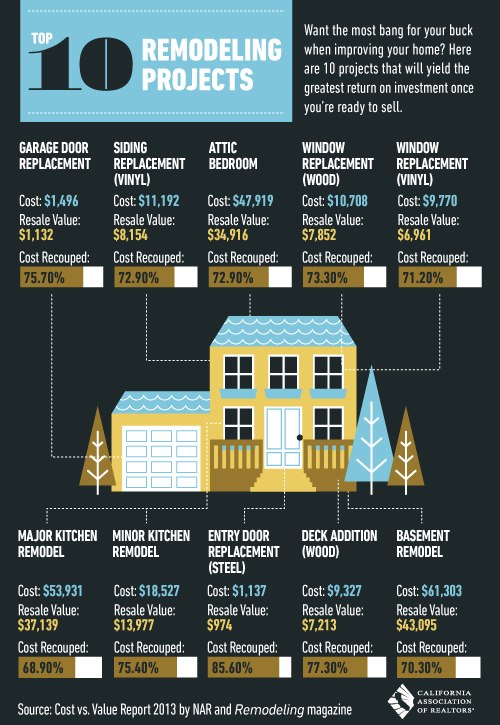
This infographic from the California Association of Realtors shows 10 key home renovation projects and the return on investment. One thing they all have in common: none generate a positive ROI. Odds are, most of the time, you won’t recoup the full cost of the reno. It’s not always explicit though. Sometimes, a house can be nearly impossible to sell with an outdated kitchen or a slew of mechanical issues, which makes some renovations necessities. Without some of the necessary renos, you’ll lose more money by reducing the price of a house that sits for sale without any action. That kind of situation makes dropping a few thousand dollars to make the home more saleable the best way to go. It’ll result in a faster sale, if not at a higher price point.

renoreturns

Before you choose to do any of the renovations you have in mind, have a Realtor conduct a market analysis on your home and the surrounding area. They can help advise you as to what kind of improvements will benefit you, and which will leave your bank account reeling. They can tell you the returns on those upgrades for your neighbourhood, and help you determine if they’re a project worth undertaking. Do the homework before you start and see the best returns, plain and simple.

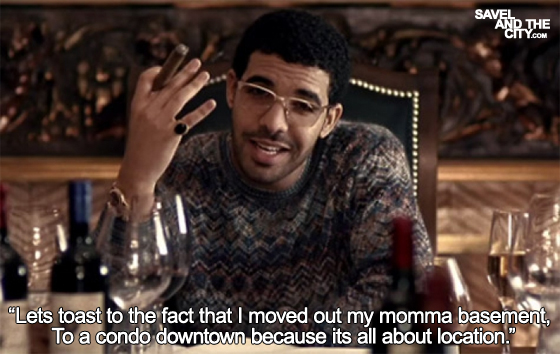
Drake’s On the Move: His $4.2 Million Yorkville Condo

My Fisher-Underwood mansion profile was the highest viewed RE Play-by-Play blog post to date. Which goes to show that despite my spouting of useful info and opinions, you guys like ogling rich peoples’ places. That’s fine haha, just means I’m back for a little more shameless self-exposure, courtesy our pal, Drizzy Drake.

I got Penthouse walls, I stay high above your a**.

And I can see it all, my balcony is glass.

Funny, he’s not kidding. This line from “Overdose” is spot on, which you now get to see for yourself courtesy the MLS and your favourite Realtor.

Maybe record sales are down, maybe Drake got tired of watching the Raptors lose, maybe he’s over paying $3,361 in condo fees every month. Whatever it is, he decided it was time to sell his 22nd-storey gem in Yorkville, seen here on MLS.

DrakesCondo1Priced at $4.195 Million, the 3 bedroom, 3 bathroom suite has some finishes worthy of a whiskey commercial. Think, Wiser’s. There’s walnut flooring everywhere to go along with meticulous custom millwork, and the whole place has a very rich feel to it. That said, the place is equally tame and subdued. Not what you’d expect from a young guy with millions to throw around. It’s one of the most tasteful, mature decor schemes I’ve seen.

Drake’s also got himself a nice little bit of outdoor space. With 500 extra sq. ft. spread heated terraces outdoors, the penthouse has what it needs to set itself apart from some of its competition. And though his unit doesn’t face south out over the lake, he’s had plenty to take in, with exposure in each of the other three directions.

The building itself is a work of art. Though it’s a new build, One St. Thomas has all the stylings of a 1930’s high-rise. It’s been described in different outlets as both luxurious and a “fusion of sophistication and class”. Have a look at it in this video, but turn the sound down, or else you’re just hear the wind.

You’d think the amenities here have to justify the over $3k per month condo fees. There’s a pool, exercise facility and terrace, fairly standard options across the market. There’s also full valet service, which Drake can use to park either of the cars he gets a parking spot for. Keep in mind that condo fees are apportioned based on the square footage of a unit, so naturally the penthouses pay the most for their use of the exact same set of amenities. So, here’s hoping that his heat and hydro are lumped into this as well. Not that $3,000 is even going to be missed in this guy’s chequing account.

Is Drake’s pad what I’d be lining up to drop $4 Million plus on? Probably not. But given that he just sold off 2 Miami condos to Mario Chalmers of the Heat, he might have some bigger plans in the works. Maybe that’s some motivation to cut us a deal.