October. A sports fan’s nirvana.

CQFg1NHUYAEXAVG

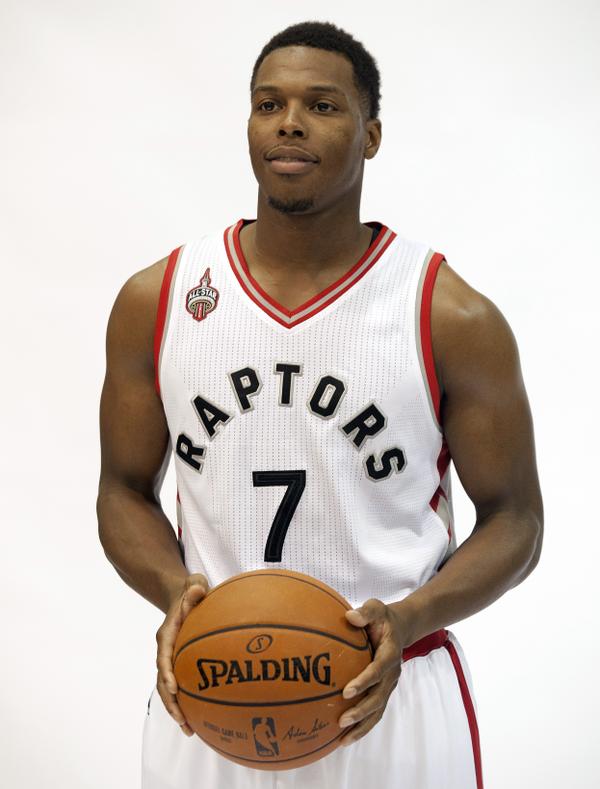
Skinny Kyle Lowry dropped 40 points on the Timberwolves last night. In 28 minutes. A sign of things to come?

October, if for no other reason, could be the greatest month of the year based solely on the mountainous availability of major sports. Just this week alone we’ve been privileged enough to witness the Blue Jays in the postseason, the start of the NHL season, pre-season NBA action, copious amounts of NFL football, and the President’s Cup of Golf.

October baseball is a special, special gift from the sporting gods. Despite the “America’s Pastime” moniker, the prevalence of the Blue Jays has enthralled the vast majority of us up here in the great white North (where we catch nearly as well as our Southern neighbours). Even with the slow start to the ALDS, the Jays have shown the same resilience and conviction that brought them the AL East title and their first playoff birth in 22 years. Baseball in general is outstanding this time of year- from exceptional pitching performances, to roaring comebacks and Cinderella stories- but the Blue Jays’ participation this time around means we’re in for even more of a treat.

The NHL season kicked off with a bang on Wednesday night. And by “bang”, I mean a hilariously soft Max Pacioretty goal on Jonathan Bernier, which is likely a good indication of the years both Montreal and Toronto are in for. Hockey Night in Canada is a national institution, and for my money, the best way to spend a Saturday evening between now and April. Plus, Rogers’ Hometown Hockey was just in Kitchener this past weekend to celebrate some of the best local hockey stories past and present- of which there are many. The storied Kitchener Rangers franchise, the old Bruins’ Kraut Line, Mike Hoffman’s stand-out rookie campaign last season; each were on full display as hockey pride oozed throughout the region all weekend long.

We got our first glimpse of the Toronto Raptors new logo, and their new point guard- Skinny Kyle Lowry- as well. Lowry leads the NBA averaging 30.3 points per game this preseason, while shooting 68.3 percent from the floor. With a new brand, new optimism, and a few new faces in Anthony Bennett & Luis Scola, the Raps are poised to contend for the Eastern Conference championship this season, with the Atlantic Division being all but theirs from the onset. Should be an exciting NBA season in the 6ix, especially if the Kyle Lowry of the preseason hangs around for the better part of the year.

All in all, October consistently proves to be a beautiful month. The leaves become vibrant, the temperature is comfortable, the fall activities are abundant- and you can ignore all of those things and enjoy day after day on the couch absorbing the constant wonder that is October sports.

How Young Homebuyers Are Bucking the “Too Expensive” Narrative

“Home ownership is too costly.”

“We don’t make enough money.”

“Banks are biased against us.”

Regardless of validity, the reasons against ownership for young people are numerous. Despite them however, more and more are defying the excuses and converting their hard-earned paycheques into a piece of property to call their own.

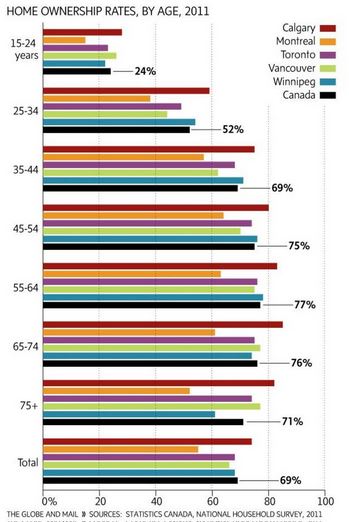
More and more young people are buying houses & condos, despite narratives to the contrary. From: The Globe & Mail

More and more young people are buying houses & condos, despite narratives to the contrary. From: The Globe & Mail

It’s a good thing they are too, as rates of home ownership tend to decline after age 65. While our demographics shift toward an older population, young buyers will be expected to fill that void. An inability to do so long-term could create a vast housing surplus, and drop property values across the board. So far though, it seems that the under-25 crowd are keeping things heading in the right direction.

Over the past decade and beyond, home values in some of the major urban cores have skyrocketed as land scarcity and foreign investment have pushed housing demand ever higher. It pits buyers of all kinds, especially young buyers with less accrued equity, in a tight spot. They’re being forced to compete with foreign, cash buyers using the Canadian real estate market as their own personal piggy bank, outside the grasp of their communist governments. Naturally, t’s a one-sided fight.

That said, in smaller markets, housing remains substantially more affordable; and the goal of home ownership much more attainable than the general overlying narrative. Furthermore, if buyers in Vancouver, Toronto and Montreal can buck the trend, then the same should be true across the board.

I hear people my age talk a lot about how expensive housing is, and what they don’t often consider is that there are landlords out there making positive cash flows off of them. In select instances, a landlord can lump mortgage costs, insurance and taxes together and still take his family out for a steak dinner on a tenant’s rent. So why then, aren’t young people more proactive about it?

Overall, we are finally catching on. In fact, home ownership among the youngest share of the population (Under 25’s) rose by 4% from 2006 to 2011 and now remains around 25% from the graphic above. To buyers’ benefits, price growth was minimally stunted by the US recession, aiding in affordability. However these gains come despite consistent upward price movement from the big 3 Canadian cities, and in ignorance of decreased affordability in those markets.

How is this possible?

Having established that, counter-intuitively, this generation’s ownership share’s been growing; it’s key to take a look at how. The biggest contributors are buyers’ parents, who are pitching in with down-payments more than ever before. From 2010-2014, first-time homebuyers received about 11% of down payments as gifts from family members, with another 6% coming from personal loans from family members. Though the loan share was unchanged from 2000-2004, the gifted portion is about 5% higher than 10 years ago. With average down payments equaling about 21% on first-time purchases, that 17% figure amounts to $10,080 on your average $300,000 home. For perspective, the house my grandparents bought in 1970 set them back a measly $10k to own it outright, so I guess $10,000 gifts are peanuts. It is understandable though that with the rise in values we’ve, the help from the folks is almost necessary to sustain the goals of today’s young shopper, and given that it’s been the parent’s houses who’ve seen the growth, we know the equity is there to be able to make these gifts, generally speaking.

As parents' aid pushes demand from D1 to D2, both the quantity demanded and the market price rise, furthering the handicap for those without family funding.

As parents’ aid pushes demand from D1 to D2, both the quantity demanded and the market price rise, furthering the handicap for those without family funding.

At the same time, parents are artificially fueling the fire. By adding $10,000 to the budgets of a growing market share, parents are effectively promoting the ballooning of home prices. As illustrated here, these gifts that young buyers are stumbling into is resulting in more buyers entering the market, and buyers’ budgets being greater than they might otherwise be. This in itself creates a bit of a dangerous predicament, since some buyers are being aided by their parents while others are not, and this price shift pushes the latter further from their ownership goals. The Canadian Association of Accredited Mortgage Professionals disputes the impact that parents are having on prices, but consider this: With 1/3 of 18- to 35-year olds who haven’t bought a home attributing the decision to waiting for prices to drop; how will they ever drop if parents keep pumping in money? Answer: They won’t. Even if you don’t have the help, use parents supporting the market as a way to make your house purchase work for you.

Housing is like any investment. You have to pay to play, and you’re not going to make a cent off of it unless you buy something. The people that complain certain stocks are too expensive are the ones who sat on the sideline didn’t buy in when they were affordable. There are elements of risk involved, but you can continue to pay rent to a landlord or you can cut out other expenses to make home ownership a reality. It’s a decision that more and more young people are making sacrifices to pursue. And I can’t blame them for a second.


With statistics from (Links in post):

“How young Vancouver buyers are crashing the real estate party”, Frances Bula, Globe and Mail, October 17, 2014.

“1st time home buyers get more family help for down payment”, CBC News, November 18, 2014.

The Canadian Condo Market is an Open Bar Wedding

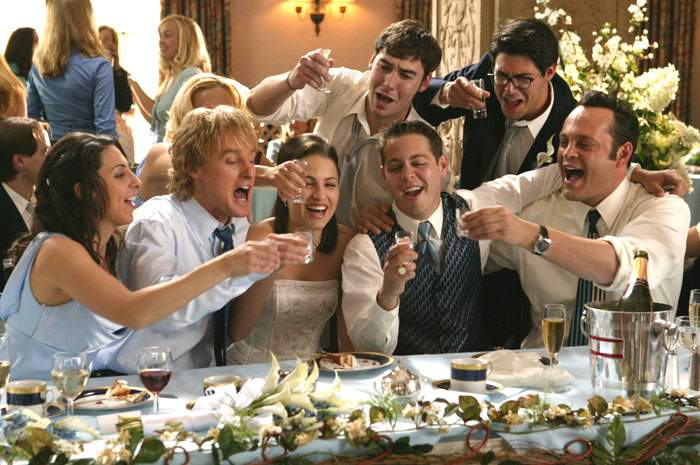
wedding_crashers_02Wedding season is essentially over. It’s cold, dreary, and unless someone gets pregnant, you’re probably not going to a wedding for the next little while. Chances are though, you went to at least one wedding this summer; and if there was an open bar, you got to see all kinds of kinds.

After an enlightening breakfast seminar with Craig Alexander, Chief Economist at TD Bank, last Friday morning, this blog post almost wrote itself. Craig described the overall real estate market in Canada, as an open bar. It’s traditionally a good thing, but the odd person goes overboard with varying degrees of consequence. Well, if that’s the case, then the condo markets in various cities are their own cast of characters.

At this open bar wedding we call the Canadian condo market, let’s grab a spot at that prime table between the bar and the dance floor and see who showed up. People watching can be a great time.

Vancouver: Who’s that guy? The one with an extra undone button or two? Fedora? Probably. Don’t worry about that him, that’s just Darrell (Or Darren, or Doug). I think he’s the bride’s dad’s friend. You know, the one all the kids call “uncle” but mostly because he’s older & drives a Mustang, and not because you put much stock into his guidance as an adult. He keeps reaching under his table and whipping out a fresh, cold Sapporo every 15 minutes or so. He also seems to have the inside track on shots of Russian Prince, but maybe it’s just optics. Regardless, it’s an open bar, and yet the guy is pulling this booze from anywhere and everywhere to keep an already roaring party going.

Vancouver’s real estate market features the highest percentage of cash purchases in North America. It’s also has the 4th highest sales of Mercedes-Benz cars in the world. The money? It’s not Canadian. It’s from Eastern Asia, an alternative to communist bank accounts or mattress stuffing. Like Darrell’s life skills, it’s all a facade. Side note: In reality, the guy was probably drinking something pretentious like Corona Light, but I changed the booze to fit the analogy. Sorry guys.

Calgary: We all know the bride’s kid brother had to feign interest through the ceremony, probably wishing he could just sit down. But after taking the obligatory 5th groomsman role, that wasn’t an option. Thankfully, 4 hours of photography later, it’s finally paid off. Now 19, and at his first open bar from the looks of things, this kid is pounding Coors Lights like they’re going out of style. The bar is fully stocked, he’s mixed in about 4 Red Bulls, and the night is young. My money’s on him to be the king of the dance floor about 11:30.

Even with the recent decline in oil prices, Calgary’s (and Edmonton’s) booming housing market is in it for the long haul. Relatively new to the dance, these markets are backed by real Canadian dollars, natural resources and when people are making $25/hour to pour coffee, naturally they can’t build fast enough to keep up with demand. Being young and free is the greatest.

Toronto: *Clinking Glass* Oooh, speeches. The moment of truth where we see just how hammered the Best Man is. The groomsmen’s gifts were flasks, and between that & cutting the bar line, this guy’s been to the well a few times. He’s got that slight lean thing happening, and his blinks are about 3 times longer than maybe they should be. We’re about 30 seconds away from either one of the finest clutch performances of public speaking or, the more likely, tales of crossing swords and poop jokes.

Toronto condos are the definition of a hot-button topic. People with no interest in real estate know about the Toronto real estate market, and absolutely have an opinion on it. Just like everybody somehow knows the Best Man, Toronto is top of mind in any real estate discussion. The speech equates to the inevitable rise in interest rates once the USA ends it quantitative easing processes and bond rates begin to rise. Then we’ll see how well the leveraged Toronto market withstands the jump in borrowing costs and the negative media attention that goes with it. Will prices hold? Only time will tell. But like the chances of the Best Man’s story not involving feces, I’m not wholly optimistic.

Kitchener: Unable to track down a bottle of sulfite-free, organic wine, the groom’s buddy (We’ll call him Gregory. Why not?) settles into dinner with a neat single-malt scotch. Despite the fact that nobody under 50 would ever do that, Gregory doesn’t care. He likes the taste, and by that, we all mean pretends to. Tequila shots and beer are too mainstream for this guy, and hey, it’s an open bar, he might as well go to town. That houndstooth tie screams “I’m better than you”, and we all know he believes it.

Condos? Pssh, lofts are where its at. At least according to every 21st century developer in Kitchener & into Waterloo. Arrow, Bauer, Seagram, Kaufman, the list goes on. Why build a new building where a house or parking lot was when we can just gut this old building with really high ceilings, huge windows and beautiful exposed brick? Actually, this does seem like an incredibly good idea. At a higher PPSF, the aforementioned buildings can justify it with stunning layouts that command deserved attention.

Waterloo: Ol’ Gramps is a bona fide member of the old boys’ club. He’s been around the block in his 60 plus years, so the only thing left to do is hit on good-looking 20-somethings. Just like the beer cart girls at the course, he’s overtipping to the tune of $5 bucks a Molson 50, just to get that blonde to smile. Sorry old gals, this suave gentleman’s only got eyes for the youngins. So what if he swings and misses? I doubt he really cares at this point. It’s all about this one night, so damn if Albert won’t enjoy himself.

Has anyone driven King St. North lately?! Holy. More and more student residences, admittedly of various types of ownership, but lets be honest; Waterloo developers are going to play the student angle until they’re blue in the face. If your kid doesn’t go to U of W, your money’s no good here. And you know what? More power to them. As the student population swells, so too will their profits. Who cares if the units don’t have balconies or functional layouts. Once they’re sold, they’re no longer the developers’ problem, so quick and cheap will be the way of the near future. More money for developers’ Lincolns & green fees. What happens as Universities shift to online entities? That’s the buyers’ problem to figure out.

Guelph: Is that suit from Men’s Warehouse? Sure it is. The bride’s cousin’s in University, so he’s working on a budget. Cut him some slack. He’s been clutching that fiver and looking at the bar longingly for an hour. His brother comes by with a drink and I’m no lip reader, but it’d seem he just realized it’s an open bar. Hah, yep. He stuffs the fiver, which now looks like it was his drink budget for the night, into his all-too-shiny suit pocket and dashes to order an Old Milwaukee, only to find real beers are also an option.

Just like this poor kid, Guelph finally realized that high-rise condos are a thing, and damn if they don’t taste better than the condo equivalent of Old Milwaukee. Granted, the condos Guelph had been working with are better than no condos, and certainly part of a healthy real estate mix. But just because we can build a bunch of 4-storey (soon to be 6-) wood frame, middle-of-the-road condos, doesn’t necessarily mean we should. It’s nice to settle into a Stella Artois once in a while, Guelph. Keep it up.

Montreal: There’s always a hot, sorta trashy looking 40-something floating around. Well, tonight is no different. Of the two table bottles, one was hers, and the other was the other five’s to split. And, well, look who’s first on the dance floor! Odds are, those heels will be off in about 10 minutes; since the red wine and vodka-crans are taking their toll. It’s that or a broken ankle. By the end of the night, this one’s going to be belligerent, vomiting, or some weirdly promiscuous combination of the two.

Sorry Montreal, I’m not buying that a big recession in unit sales in 2013 was a fluke. Among the big three markets, Montreal’s prices are the lowest, but affordability is still a concern. With large inventories, developers are probably feeling a little loose too. Expect that they may have to further incentivise pre-construction buying, which’ll continue to curb price growth, which has shrunk year-over-year, since 2010. Montreal might be a fun night for an 18-year old, but the long-term prospects aren’t stellar.

For some markets, the honeymoon might be over. I think we’ll have a better sense sometime in mid-2015. In the meantime, settle in and have a drink. Most markets are going to be fine. Especially around here.

Multiple-Offers: Winning, or At Least, Not Losing

Real_Time_BiddingBy now you’ve heard about the wild, buyer free-for-all that is the Toronto real estate market. The number of buyers looking to make a move combined with a shortage of lucrative inventory has created a sellers’ market to end all sellers’ markets. We’re starting to see multiple offer situations on Toronto condos again, a trend not seen in recent years as condo supply reached some record highs.

Chances are you may have seen other stories about multiple offers, but none compare to this one from last week that saw a house in the Yonge & Lawrence area, listed at $699,900, sell for $1,366,000 with 72 offers. SEVENTY-TWO.

I have no idea how this happens. At offer number 10, your odds as a buyer are incredibly slim, to the point that you probably shouldn’t bother. But hey, there’s a chance right? Apparently then, another 62 people proceeded not to care much for the odds either.

Naturally, there were likely a ton of offers in there that were just doing the sellers a favour by boosting the quantity of competition, without being a real threat to the serious buyers. The offers that included sale of property, financing, or insurance conditions would fall into that category. So would anything around asking price. Regardless though, they were there, and on every other bidder’s mind when it came to formulating an offer price.

In competition, the cleaner an offer is, the more lucrative the offer, as oftentimes conditions can be as important as price. When there are 72 offers to choose from, the seller isn’t going to accept a condition that forces them to wait for a house in a less sought after to sell. They’re taking the sure thing.

By far the biggest challenge buyers face in multiple offer scenarios is the blind bidding process. This will always garner the optimal result for the seller and will leave at least one bidder with a bad taste in their mouth, and hopefully that’s if they lose. In the story above, I’m sure all 72 will end up with some degree of animosity. From the guy who bid $675k conditional on the sale of his place in Georgetown; to the woman with the second best offer who lost by a few grand; to the winners who’ll look back at the $1.1M house they just paid an extra $260k for, and who will then be putting another few hundred thousand into fixing it up; they all lose. Working in their sellers’ best interest, listing agents don’t disclose any terms of the competing offers to the buyer agents, which forces buyers to put their best foot forward right off the bat. The best case for the buyer in multiples is that they get a house they love for what it’s worth. With 72 offers, that’s not happening.

Congrats to the listing agent for drumming up that many offers and doing their seller client a huge favour. At the same time, buyers and their agents need to do a better job of knowing what market value on a house like that is. Ultimately, list price doesn’t mean a thing. Only people who are willing to pay what a house is worth should be offering, and I’m willing to bet that 80% of those offers were nowhere close. As Toronto Realtor David Fleming (@TORealtyBlog, a solid twitter follow) was quoted saying, “we’re in a hot market, but no house is hot enough to get 72 offers”.

Fortunately, most of you aren’t buying in Toronto and will probably never encounter such an absurd scenario. There is a chance though, depending on location and market conditions, that you could find yourself in competition with a few other buyers. Let’s take a look at that process and what you can do to win out, or at least feel good about walking away.

As a buyer, you really need to weigh your interest in a property before committing to a multiple-offer situation in an attempt to buy a property. If you really love the house, chances are you’ll find a way to come up with a few thousand dollars if you need it. Because of the competitive nature of things though, it’s important not to get caught up in winning but rather ensuring you still like the house you buy at the end of the day.

When sellers receive multiple offers to purchase they basically have 4 options:

  1. Accept the best offer
  2. Send any number of the offers back for buyers to try again
  3. Counter-offer on the best offer
  4. Work with none of the offers

Number 4 is pretty rare. After all, as a seller, if you go routes 2 or 3, you’re not committing to any of the offers either, but it’s much better to work with an offer you have in front of you than to wait and hope a few more materialize. Your first offer is usually your best offer, so if you can pit more than one buyer against each other, you’re crazy not to.

With option 3, if a seller counters your offer, it gives you a sliver of leverage since you know that there are no other offers in play at the moment, and that the seller has lost their competitive scenario. However, you know that those offers could come back in at any time if you don’t accept the sellers’ counter offer. The seller is basically telling you that your offer was the best, and may be making a change to the closing date or a condition that’s simply there for you to accept and win the battle.

Leverage as a seller is paramount. I’ve offered with clients in a multiple-offer scenario which we lost, but when the other offer fell through, we went back in $5,000 lower than our original offer knowing that we had no competition. My clients ultimately got the house for $3,000 less than their original offer. If you’re a seller, you better make damn sure the counter is going to be accepted if you choose to go with option 3.

If the sellers send you and others back to submit a new offer, it’s for one of two reasons: Either none of the offers were acceptable OR multiple offers were very close to each other and the seller thinks they can get higher bids back from one or more to put them over the top. It’s a bit of a slap in the face and maybe a tad greedy, but if the seller thinks that buyers’ interest outweighs the offense, it’s a seller-friendly strategy that they can employ.

As a buyer, number 1 is the easiest to navigate if you win, but sometimes hard to swallow if you don’t. Eventually your agent is going to find out what it sold for (potentially right away if the winning offer is condition-free) and the worst thing that can happen is your agent giving you the sale price and it being something you would’ve been willing to pay. There you’re back to square one. Two of my listings have sold with multiple offers in the last 2 weeks, and the phone calls to the losers in the bidding process are usually tough ones to make. Let’s make sure that phone call doesn’t happen.

Multiple-offers can be a sticky situation as a buyer, so make sure you’ve got an agent who’s been there before and can help you strategize to achieve the best outcome for you. You’ll be glad you did.