
One of the most common questions I get from potential home sellers is: Should I do “project x” or leave it for the next owner? It’s not necessarily clear cut, but if you’re going to do something, you’ve got to do it well, and have buyers perceive it as better than the alternative. If you’re contemplating upgrading your linoleum flooring to higher-end linoleum, you might as well be taking cash from an ATM and stuffing it down a manhole. Things buyers would consider doing anyways (updating appliances, stone countertops, tearing out carpets for hardwood) are the way to create value.
Buyers these days have more refined taste than ever before, but often you’ll find two types of buyers: Those that want to save money and buy a home they can renovate, and those that are prepared to pay, so long as they don’t have to lift a finger once they move in. If you’re setting your home up to be somewhere in between these two markets, you’re destined to lose. With the former, they’re not typically willing to pay for things they’re just going to do over again. And buyers looking for turn-key homes don’t really care if the home is flashy if it isn’t cohesive.
For example, I went through a house with a re-done kitchen just this week and though the kitchen couldn’t have been but a few months old, the house still took on the “fixer-upper” stigma because of outdated doors & trim, holes in the drywall and ageing structural and mechanical components. There’s a difference between a “wow factor” (a term I hate, personally.) and lipstick on a pig. And it’s important to know whether buyers will see your reno work as the former or the latter.
In the Village by the Arboretum in Guelph, an adult-lifestyle community where I spend a lot of my time and resources, some sellers have installed new carpets, which they perceive as value-added finishes. After all, they often spend money to put in high-quality, plush carpets, and have them professionally installed. Unfortunately, most incoming buyers will see them as disposable as they look to upgrade to hardwood floors, and a detriment to the home. Despite the money put into new carpeting, the home is likely no more valuable in a buyer’s eyes, whereas it could’ve been had sellers made the move to hardwood prior to selling.
This infographic from the California Association of Realtors shows 10 key home renovation projects and the return on investment. One thing they all have in common: none generate a positive ROI. Odds are, most of the time, you won’t recoup the full cost of the reno. It’s not always explicit though. Sometimes, a house can be nearly impossible to sell with an outdated kitchen or a slew of mechanical issues, which makes some renovations necessities. Without some of the necessary renos, you’ll lose more money by reducing the price of a house that sits for sale without any action. That kind of situation makes dropping a few thousand dollars to make the home more saleable the best way to go. It’ll result in a faster sale, if not at a higher price point.
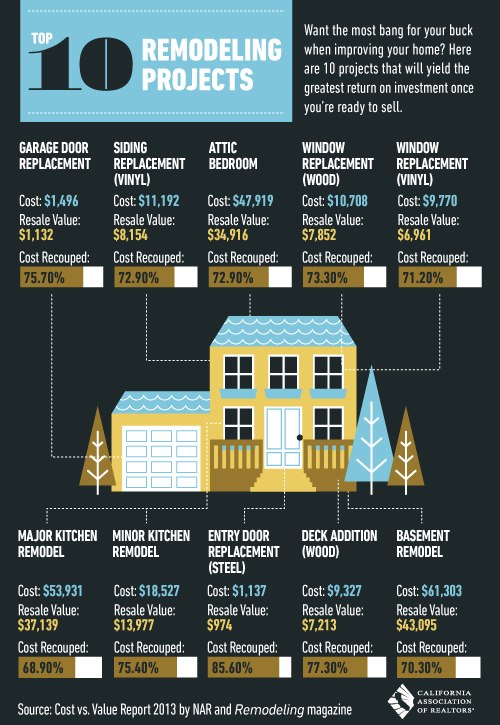
Before you choose to do any of the renovations you have in mind, have a Realtor conduct a market analysis on your home and the surrounding area. They can help advise you as to what kind of improvements will benefit you, and which will leave your bank account reeling. They can tell you the returns on those upgrades for your neighbourhood, and help you determine if they’re a project worth undertaking. Do the homework before you start and see the best returns, plain and simple.
 Real Estate Play-By-Play